When analyzing real estate metrics, it is crucial to approach comparisons with a discerning eye, especially in a market as dynamic as Knoxville, Tennessee. Fluctuations and unforeseen events can significantly impact the housing landscape, rendering year-to-year comparisons less meaningful or accurate. In light of this, it is essential to shed light on the uniqueness of the past years and embrace a more realistic perspective. Additionally, when it comes to buying or selling properties in Knoxville, partnering with a reputable realty company like JustHomesGroup can provide the expertise needed for informed decisions.
The Unprecedented Years:
The real estate market witnessed a profound transformation in the wake of the pandemic. The demand for homeownership surged, fueled by the need for larger spaces, home offices, and expansive backyards. First-time and second-home buyers flocked to the market, supported by historically low mortgage rates and the implementation of forbearance plans that curtailed foreclosures. As a result, home values soared to unprecedented levels, creating a market that was considered elusive and highly desirable—a true 'unicorn' year.
The Return to Normalcy:
As we navigate the current housing market, it is essential to acknowledge the transition back to a more normal landscape, bidding farewell to the 'unicorn' years. Comparing today's market to those extraordinary times may lead to misleading conclusions. Here are three examples:
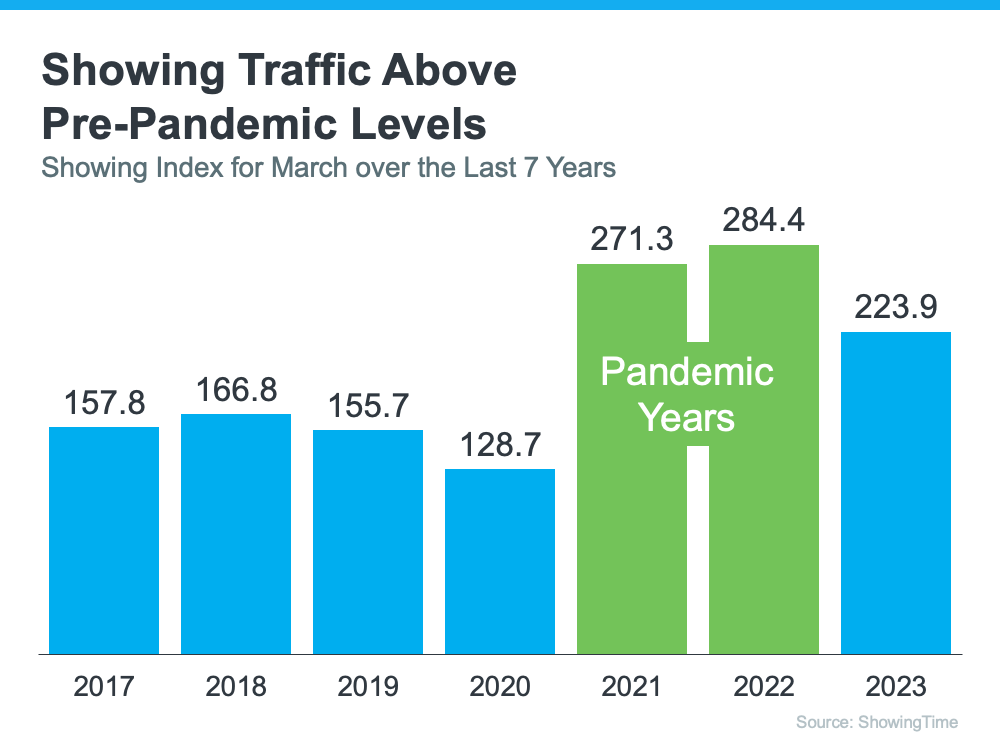
Buyer Demand: Despite headlines suggesting a dearth of buyers, the reality is that the United States continues to witness over 10,000 home sales daily. While buyer demand has decreased compared to the 'unicorn' years, a closer examination, as shown by ShowingTime data, reveals that buyer activity remains robust when compared to pre-pandemic years (2017-2019).
Home Prices: Attempting to compare current home price increases to the past couple of years would overlook the extraordinary appreciation witnessed during that period. Freddie Mac data highlights the distinction by showcasing more typical years (2017-2019) for a meaningful perspective. The graph illustrates a return to more normalized home value increases, with several months displaying minimal depreciation in the second half of 2022. Moreover, Fannie Mae reports a market that has embraced a more normal pace of appreciation in the first quarter of this year.
Foreclosures: Reports about increases in foreclosure filings have sparked attention, but it is vital to understand the context. Comparing these figures to historically low foreclosure rates will naturally yield significant percentage increases. However, data from ATTOM, a property data provider, clarifies the situation by presenting the numbers in relation to the pre-pandemic years (2017-2019). While an increase in foreclosure filings is expected following the end of the moratorium, it aligns with the typical filing rates witnessed during those years.
Maintaining Proper Perspective:
As headlines about the housing market surface, it is crucial to approach them with a discerning eye. Many of these reports stem from inappropriate comparisons to the extraordinary 'unicorn' years. By seeking the guidance of an expert real estate team like JustHomesGroup, you can ensure that you have a knowledgeable partner who can help you navigate the nuances of the Knoxville market and provide valuable insights to keep everything in proper perspective.
Conclusion:
In the ever-changing landscape of the Knoxville real estate market, it is imperative to approach comparisons with caution and a pragmatic mindset. Recognizing the distinct nature of the past years while embracing a return to normalcy will enable you to make informed decisions. By aligning yourself with a reputable realty company like JustHomesGroup, you can leverage their expertise to navigate the Knoxville market successfully and attain your real estate goals with confidence.
Experience the Joy of Gatlinburg, Tennessee Vacations with Julia Hurley, Knoxville Realtor!
Are you tired of the same old vacation routine year after year? It's time to inject some excitement into your summer plans! Imagine owning a vacation home in the breathtaking destination of Gatlinburg, Tennessee. With its picturesque landscapes, endless outdoor activities, and charming atmosphere, Gatlinburg is the perfect place to create lasting memories with your loved ones. And guess what? Julia Hurley, the renowned Knoxville realtor, is here to help you find your dream vacation property!
Why Rent When You Can Own? Say goodbye to the hassle of finding available rentals in your favorite vacation spot. We all know how challenging it can be to secure the perfect rental at the right time. But with your own vacation home, that worry disappears! As Forbes wisely suggests, "If the idea of vacationing at the same place every year makes you feel instantaneously relaxed, buying a vacation home might be a wise move." Julia Hurley can guide you through the process, ensuring that you always have a comfortable and stress-free vacation destination waiting for you.
An Investment That Keeps Growing Owning a vacation home is not just about having a place to unwind; it's also a smart investment. Just like primary residences, vacation properties often appreciate in value over time, especially in areas with high market demand. This means that while you're enjoying the beauty and tranquility of Gatlinburg, your net worth could also be growing steadily.
Tax Benefits to Sweeten the Deal Did you know that owning a vacation home can provide you with valuable tax benefits? Depending on the location of your property, you may be eligible for various tax deductions. To make the most of these potential advantages, it's advisable to consult with a tax professional who can guide you through the specifics.
Your Perfect Vacation Home Could Be Your Dream Retirement Destination Imagine falling head over heels in love with your vacation home and deciding to make it your forever paradise. Gatlinburg has that effect on people! If you can't resist the charm and allure of this incredible location, you might even consider selling your primary residence and retiring in your beloved vacation home. Julia Hurley can assist you in navigating this exciting transition and making your retirement dreams a reality.
Let a Pro Make Your Dreams Come True As you gear up for a memorable summer vacation, picture yourself enjoying the comfort and convenience of your very own vacation home. And the best way to find your perfect match? Enlist the expertise of a local real estate agent like Julia Hurley. She possesses the insider knowledge and resources to help you explore Gatlinburg's real estate market and find a vacation property that suits your budget and preferences. Julia can also enlighten you about the numerous advantages of owning a second home.
Time is on Your Side - Let's Connect! If any of these reasons resonate with you, don't hesitate to reach out. You still have plenty of time to make this summer extraordinary by spending it in your very own Gatlinburg vacation home. Get in touch with Julia Hurley, Knoxville's trusted realtor, and take the first step toward a lifetime of joyful vacations and unforgettable experiences. Your dream getaway awaits!
Melissa Blettner is the Chief Executive Officer for Ancient Lore Village, a one-of-a-kind fantasy resort right in the heart of Knoxville. On this episode of ConnectTheKnox, Melissa shares her philosophy of hospitality with purpose and how her role with Ancient Lore Village brought her from Wisconsin to Knoxville. Melissa describes some of the similarities between her hometown and Knoxville, as well as what she feels are the biggest opportunities for Knoxville to attract new businesses and residents. Melissa also reveals the plans to expand Ancient Lore Village into new locations, and some upcoming attractions and events you can expect to see at their Knoxville location.
Highlights
00:00 Intro
00:44 Melissa describes how the Ancient Lore Village project brought her to Knoxville
03:21 Julia and Melissa discuss the magic of Ancient Lore Village, and Melissa explains how they developed such an immersive experience and her plans for the future of the resort
08:31 Ad - Dr. Joe Chiro
09:01 The long-term vision for additional developments in Ancient Lore Village
11:09 Melissa describes the similarities between her hometown and Knoxville
12:39 The ways Ancient Lore Village is working with the University of Tennessee
14:11 Melissa talks about the unique location of Ancient Lore Village and how it’s deceptively close to downtown Knoxville
17:47 Melissa explains what amenities and activities are handicap-friendly at Ancient Lore Village
Julia: Hey everybody and welcome to another episode of Connect the Knox. I’m your host, Julia Hurley, connecting Knoxville to the nation. Today’s guest is Melissa Blettner, the President and CEO of Boyd Hollow Resorts. Didn’t even know this was a company that existed until Joe and I took a weekend trip to a very special village right in the heart of Knoxville, and you would have never known was there. And Melissa runs the whole show, and some. Melissa, thank you for being a guest on today’s podcast. Can you tell us a little bit about how you ended up in Knoxville, Tennessee?
Melissa: So, I was introduced to Tom Boyd and the Ancient Lore Village project, back in June of 2019 and I was brought on as a consultant to help them at that time, and that is why I’m in Knoxville.
Julia: So, tell us a little bit about why you were brought on as a consultant. I mean, obviously, Tom Boyd doesn’t just randomly call people to consult on things. The man knows a lot, so you must be something very special for him because I know that the Ancient Lore Village in Knoxville is a special thing he has always wanted to do, so you have something to offer Knoxville, Tennessee. Tell us about that. Tell us how you ended up being a consultant for something as important as Ancient Lore Village.
Melissa: Sure. Well, I appreciate that, first off. Tom and I really hit it off. My background is hospitality. This was the first hospitality project that Tom has endeavored into. He has 17 different companies, all founded right here in East Tennessee.
And my background, I had actually never been to Knoxville before the day I came to meet with Tom. And so, that in and of itself is kind of amazing. But prior to joining Ancient Lore Village, I was with a small, startup hospitality company. And started with that company when they were just 100 employees, grew it to over 9000 employees in 17 different locations over a span of 20 years. So, at first, when it was a consultant, Tom was just getting ideas on this great hospitality product and how he could bring it to fruition.
So, I was brought on as that. And then as time progressed about a year later I came on as the CEO. And really, our vision for Ancient Lore Village and the larger company, Boyd Hollow Resorts, is to create a place of good, a place where people can come together and disconnect to reconnect, a place where we are creating what I call hospitality with purpose. And after being in the hospitality industry for many, many years, that’s really why I’m in the industry, is to bring that purposeful experience to guests, whether it be at Ancient Lore Village or with my prior company.
Julia: So, I love that you said hospitality with purpose. I would probably trademark that if I were you. That made me want to do more things with you, just that tagline right there. I personally loved Ancient Lore Village, and had found out about it obviously through the Boyds, however, I had not been able to stay there yet. So, we had come on a package deal, had never been there. And I genuinely had not a clue it was that close to downtown Knoxville.
Melissa: Oh, just 15 minutes from downtown.
Julia: Yeah.
Melissa: Right there.
Julia: Everything is right there that you need. The food was amazing. The hospitality was top-notch. You got employees that came from Disney. I mean, that’s one of the highest-trained places that you can come from.
We did the archery classes, we did the axe throwing, we had an outdoor movie. It was so peaceful. And the rooms themselves are all themed. And they look, if you look at them online—Ancient Lore Village—if you look at them online, it looks like a hobbit house. And they look very small and you walk through the door and you will—you feel like you’re in a castle and that you genuinely have some of the most luxurious things around you. You feel completely melted into the side of the mountain. How did you all create that? And what are you creating for the future?
Melissa: So… boy, two good questions there. So first, we’ll say how did we create it. And the village is actually based on Tom’s story. He wrote a book called Bokee’s Trek, and this is where the hospitality with purpose comes in. So, a little bit of the background of the story.
Tom was out on the campaign trail with his son Randy, when he was running for governor back in 2018, and one of the things Tom found was that people in communities right next to one another didn’t necessarily get along. And so, he found out that there was a lot of hatred when he was out talking with different people on the campaign trail. And he wanted to write a book that would bring people together, that would allow people to understand that people from all backgrounds, from all religions, from all everything could come together in one place. And that’s where the hospitality with purpose comes in, right? So, he wrote this book, and he couldn’t say, “Well, Joe in this community and Sam in this community—” so instead, he used a cast of characters that a lot of people are familiar with fairies, Orcs, Leprechauns, Gremlins, Bokee, who’s the key figurehead.
And Bokee went to all the different villages and he met people and all—or characters—in all of the villages. And what he found out was that they were all good, that they all had good qualities and something to provide and something to contribute. So, then Bokee went back to his village and he was banned. So, all of the characters from all of their independent villages were banned, and they had to go somewhere, and in their guidelines, they needed to create a village where they would live, side by side with one another, in peace. And that place is Ancient Lore Village.
So, you can come here and—so really, that’s the storyline behind it. And then after Tom wrote the book, and he had a great artist that helped capture the ideas that Tom had, he sat down with an architect, Daniel Levy, from right here in Knoxville—we use a lot of great local Knoxville companies—and Daniel took Tom’s ideas, if you look in the book, there’s the tree elf and the ground elf house that Bokee visited on his trek, and it looks just like our ground elf burrows and tree elf nest that’s here. And then we had a great interior designer, Z Creative—Zarah Bates from right here in Knoxville—and she scoured the book and she read all the little intricate details and developed the crazy luxury that we have in these dwellings. So, right now I’m sitting in the Waterfall Villa, which is one of the—it’s the Water Fairy Villa—and it’s a two-room suite, but you can see the walls behind me, you can’t even really see that the detail of it, but they’re all Venetian plaster that also was done from a local Knoxville company.
Julia: I had Eugenia on the podcast.
Melissa: Oh, yeah. I love Eugenia. Yes. So, they did all of the Venetian walls. The fireplace behind me, you might think it’s a white brick. It’s not. Actually, Eugenia’s team did that as well. And one of the great things is the wall behind right here, we’ve got real willow trees, but behind—or birch trees, rather—behind that, it looks like you’re in a birch wood forest. They did 14 different layers of Venetian plaster. So, maybe I’ll pick you up and move you at the end of the podcast and give you a little peek.
Julia: [laugh]. Let’s just keep it where it’s at.
Melissa: Right now, we’re right here. Right here.
Julia: I’ll come do an actual on-site tour. How’s that? How’s that?
Melissa: That’s great. We can do that. We do a walking tour.
Julia: So, I know that you’re building a new building, you’re doing a little construction of that way. What’s happening in the future? I know there’s a wedding venue at the top of the mountain and there’s are some signs that say ‘English Pub.’ Tell me a little bit about the long-term vision here.
Melissa: So, the long-term vision here, this property won’t get much bigger than what it is right now. We are planning on adding a few additional dwellings, so a few themed dwellings that will cater more towards families, so they can sleep up to five people. We also are planning on adding a few tree houses which will be really fun. Right as you enter in, we’re building our administrative office and gift shops. We’re really excited about that.
And then we’re pretty much it for this property here. And the vision—and this is where the great part of the larger reach of the hospitality with purpose comes in play, and also the Boyd Hollow Resorts—is that our vision is to not just have this one location here in Knoxville, but to branch out and have many locations across the United States and throughout the world.
Julia: I think that’s going to be an absolutely fantastic vision. I know there are so many people, and I know this because I always did my research on our podcast interviewees, I guess you could say, and really and truly wanted to do more research on this specific entity. And as I was talking with people throughout Knoxville and asking them, “Have you stayed there? Have you gone on a tour? Have you gone to any of the dinners that they host?” So, many people still do not know how close this is to their own backyard.
So, even Knoxvillians have not taken the opportunity. However, when we stayed, we met people from six states that were all together for one night for Halloween. So, it was very interesting to see how it is connecting the nation to Knoxville and bringing people into a smaller hometown to get that big feel. And I’ve always said if you can make it in Knoxville, you can make it anywhere, and that kind of stands true for any business, honestly. So, tell us a little bit about where you personally came from as far as place and compare that to Knoxville for us. Like, what do you feel is the biggest difference that you have experienced here?
Melissa: So, I come from Madison, Wisconsin. It’s a lot like Knoxville, actually. Madison is on an isthmus so it’s in between lakes. Knoxville has the Tennessee River running right through it. Madison has the University of Wisconsin, Badgers. Knoxville has the Tennessee Vols. The Tennessee Vols are kicking butt this year and Badgers, no so much.
Julia: [laugh].
Melissa: Let’s see. Wisconsin Dells, Wisconsin, the most visited tourist attraction in the state of Wisconsin is about an hour and 15 minutes from Madison, and hour I guess. Right down the road is the Smoky Mountains, Pigeon Forge, Gatlinburg, Sevierville. So, in that respect, it’s so much. The biggest difference is the hills [laugh]. We don’t have the hills there.
So, the mountains, you know, coming through—and the weather, right? So, right now we’re sitting here, it’s end of November; it’s a great day. Wisconsin, right about this time is when it’s going to switch in the weather and it’s going to be really cold there for a really long time. And we’re going to have a great winter here in Knoxville.
Julia: And I had no idea that is a very almost line-for-line comparison. I mean, Knoxville is exactly an hour outside of the most visited national park in the country. That is almost exactly the same feel, except UT is one of the largest D-1 colleges in the country and I think that is one of the biggest draws that we have, not only for education purposes but for worker’s talent, which again, gives people experiences in Knoxville that no one else can have. So, when you go to take this all over the nation, all over the world, these students at UT can come and intern for you and learn something about the hospitality industry. Have you all been able to partner with UT on some internships like that?
Melissa: Oh, we have. We have. We’ve had quite a few people from the school of hospitality work here already. I’ve spoken to their hospitality, advanced hospitality class a few times. And UT has a lot of events out here. They have so many different departments.
And we’ve got, like, the UT Police Department coming out here for a holiday party and UT Hospice Center coming out. So, there’s just all sorts of different UT things and we love working with them. And they have a great time when they come out here. So, it’s nice. You know, we said we’re only 15—10 minutes, really—to downtown and really ten minutes to the university. So, we’re really just right there, really, really quick access.
Julia: We all know that real estate is location, location, location. Our team at Just Homes Group Realty Executives have the true expertise, pairing buyers and sellers with the right opportunities. Whether you’re looking to buy or sell a home right here in Knoxville, Lenoir City, Clinton, or Farragut, we have the expertise throughout every Knoxville surrounding area. Call just Homes Group Realty Executives today.
Julia: So, when we were on our way there, again, number one, our GPS did, but wasn’t paying attention. So, I was on the phone, I was talking to someone, telling them where we were going, I said, “I have no idea where we’re going or how far away this is going to be. I might lose cell service. Just stay on the phone with me. I’ll call you back.” And then five minutes later, I’m like, “Oh, I’m there.” [laugh]. I was like, “I’m here.” I could not believe the proximity to Knoxville and the peace and quiet that close to everything. That was just stunning.
Melissa: Well, that’s the thing. We sit on 67 acres here. We’re one of the only green spaces between downtown Knoxville and the Smoky Mountains, so we have that preserved. We’ve got miles of hiking trails, our archery and axe ranges are nestled in the foothills of the mountain here, so you’re not—and you experienced it—you’re not, like, in a caged-in indoor pole shed for archery and axe throwing. You’re, like, right, there.
So, we’re excited about that. We’ve got a lot of—one of the big things that we’re doing for this summer—you know, probably the most asked question that I get when I’m answering the phones—and I’ve been doing that a lot in the last couple of weeks because we’ve been so busy—is, “Can I just come and walk around there?” And you do need to be at an event or something going on, but we’re changing that for 2023. And starting January 1st, from 1 to 4, you’re going to be able to come out and do a Village Discovery Pass. And that’s a self-guided tour; you can hike the trails. So, you can go ahead and do that.
We do request reservations so we know who’s coming. But we also will have great self-guided tours. So, we’re in the process of developing those for next year and we’re really excited about it. We’ll have five different tours to choose from, ranging from our beautiful garden tours, where you can really get a lot of great information there, to the story tour that takes you right into, like, more about the characters and the lore of Ancient Lore, and then into, like, the building of Ancient Lore Village, like, talk about the 1400 potted plants that make Bokee’s a 1600-square-foot underground home, right? And then also we’re going to have a scavenger hunt. So, there’ll be little things throughout the 67 acres that you can go and find. Maybe there’ll be a prize at the end, too. We haven’t developed that out yet.
Julia: I will say, one of the first things I commented on, other than the absolute solitude that place offers someone, like myself, who owns, also, several companies and my—I’m just going 24/7 was the topiary. There are so many different types of plants. It took me two hours, go through just the room that we were staying in and all of the different availabilities outside. And of course, I have to touch every plant. I’m one of those people, I want to touch it and feel it and smell it.
Melissa: That’s good. Then it kind of gets—you, like, feel the vibe of it, you get the energy from the plant.
Julia: Very tactile.
Melissa: Well, the garden is in front of each of the unique dwellings. So, when you look at the village online, you can see the Gremlin Dens that are next to the Orc Home that’s next to the Fairy Cottage. So, they—all the characters do live side-by-side. And as we were thinking about, like, how do we build out the inside and decorate them, one of the things that Tom’s wife had in mind—and she’s a master gardener—is all of the gardens outside need to reflect the characters inside that would live there because it’s like they’re putting on their own garden. So, it’s great. It’s absolutely amazing. And those gardens will start to pop up, probably mid-April, we’ll start the garden tours.
Julia: So, what if I’m disabled? I can’t go hiking, I can’t go up the mountain. Tell me what we can do there.
Melissa: Yeah. Yeah, for sure. Well, that’s it. You can come and do these the self-guided tours. So, you can take a garden tour and it literally meanders through the path of the village and you get to see all of the different plants and learn about those. And then you have that information too, so if you’re like me, you go home and you try and recreate it and then you’re like, “I can’t do that.”
Julia: The Orc Village is handicap friendly, correct?
Melissa: It is, yes. And if people have mobility issues, like, we’ve had assisted living houses come out for an afternoon lunch and a tour. And they love it because they’re getting out there, they’re, like, out in nature, out in the outdoors. They love it and they can come through. So, our team is really, really good. I like to call them five-star friendly because they are: they’re really friendly. They’ve got that southern hospitality and they will help. We’ve got some golf carts that if people have mobility issues, we can get you through the village to see it.
Julia: So at the end of the day, how long is it do you think? Like, what is the growth period that we’re going to see, possibly finishing out some of the product in Knoxville and then carrying this through to other locations? And will there be—I’m just asking because I am an avid vacationer—will there be a package program for all states ticketing, kind of like a Disney Experience [laugh]?
Melissa: Oh, I think there definitely will need to be, and we’ll probably have to do some type of focus group when we get to that point. But I think the vision, really, for 2023 is that we’re going to be finishing up the construction here with the office building. We’ve got some public restrooms that we’re adding and then the overnight accommodations that we’re going to be adding. And then we’re going to be pretty done here at this location. But also in 2023, that’s when we’re starting to branch out and look for additional locations.
We have three different kind of opportunities if you will, we have an Ancient Lore B&B, we have an Ancient Lore Settlement that’s a little bit smaller than what we are here. And then we have an Ancient Lore Village, that is what we have here plus more lodging accommodations. So, we’ve got three different concepts that are out there. And the big thing is the Ancient Lore brand of really being able to spread that throughout so that people can get that point across of what we’re looking for. So, we’ve got a lot of different opportunities for people to license the Ancient Lore brand.
Julia: That is absolutely fantastic. I just love to hear about any business in Knoxville that’s growing and branching out. Again, it draws attention to what Knoxville has to offer, which is the whole point of the podcast. I think there are so many people outside of this area that do not understand why Knoxville has become such an interesting area to be in.
Of course, Nashville is growing exponentially. They’re running completely out of space, which is fantastic for everybody else and everything around them, but Nashville was already on the map. Knoxville, in and of itself, is more like a hidden gem of opportunity, business growth, connections, you name it, any industry right now is Knoxville-friendly. What is it that Knoxville is lacking, possibly, to continue to talk about and attract different kinds of things from your perspective, being not from here but being here?
Melissa: Boy, I think probably the… the biggest opportunity I think for Knoxville is really their just overall growth development plan, right? And I think that that’s a challenge, especially when you look at, like, the municipal planning board, right, for Knox County, or Blount county, or all of them around here because they’re all growing so much. And there’s only so much that the officials can do that are on those committees. And they do a great job, but that’s a difficult thing is that total planning of, do we have enough infrastructure for homes and roads and all of that? So, the master plan of Knoxville as it grows is going to be, I think, a challenge.
But like you said, East Tennessee is a great place to be, Knoxville is fantastic. There’s so many great things. The downtown area is easy to get around. It’s a fun, safe area. You can walk around downtown, you’re 35 minutes from getting to Wears Valley or, you know, 40 minutes from here to Townsend, the quiet side of the Smokies. Or you can go into Pigeon Forge, Gatlinburg, and Sevierville and check out all of those tourist attractions. So there’s, like, everything that you have, right here.
Julia: Yeah, I agree. And so, many people come here from out of state and stay because they just absolutely fall in love with everything that we have to offer. And I always appreciate when people see the potential and the opportunity in Knoxville because it is an amazing place to be, as is Ancient Lore Village, by the way. So, [laugh]. Really, sum up for us everything that we can possibly do.
We want to make sure that anybody that takes notice of this podcast and is paying attention to everything around you because your surroundings at this very moment are so unbelievably detailed and gorgeous, and of course, I posted probably about 100 photos of every detail of the room we stayed in, as well as the plants, but how can people connect with Ancient Lore? How can they become part of this process? Where would they go to get the walking tour tickets, maybe like a yearly pass for 2023? And how can they be more involved in spreading the word on the book—oh I already forgot the name of the book—
Melissa: Bokee’s Trek.
Julia: Bokee’s—thank you. Yes. How—
Melissa: Bokee’s.
Julia: Tell us [laugh] all of that.
Melissa: So, the best place to stay connected for the latest updates is our Facebook, Instagram, TikTok, follow us on those social medias are the ones that we are really out there. And we’ve got a great social media team that really keeps us top-of-mind there. We also post all of our events as Facebook Events, too, so that you can do that. But the tickets and everything are sold right on our website at ancientlorevillage.com.
You can check, we just revamped it too, so there’s an ‘Our Story’ page on the website now where you can learn a little bit about the book, you can download the book. You can check out our stay page and learn all about the dwellings. Coming in 2023, we’re going to have a virtual walkthrough so you can actually go through and pick different spots in the room to take your vantage point from for all of the different dwellings. Our packages, our overnight packages we have coming up in 2023, we’ve got our Ultimate Package so you can come stay overnight, have dinner and archery and axe and breakfast and everything’s all included. We have the Stay and Play package that’s just archery and axe, and you can stay overnight.
We’ve got some great special rates going on in January. It’s a little bit slower for us then, so come out and see us then. January, we’ve got—we’re loading it up. They’re not on the calendar yet, but we are going to have wine tasting, bourbon tasting, moonshine tasting dinners, all sorts of great different events on Friday and Saturday nights here. We’ve got trivia coming back in January on Wednesday nights, we’ve got our Archery, Axe, and Apps that’s going seven days a week now, starting in 2023.
We are, like, stacked up with holiday parties for December. But we still have a few spots, so if they haven’t reserved yet do that. And reserve for next year. We’re already getting bookings for next December. So, it’s good. Yeah, come on out and see us. Share—you can sign up for our newsletter—share, tell your friends, gather all your friends together, come together and have a party out at Ancient Lore Village.
Julia: I think that’s absolutely fantastic. And I’ll tell you, when Joe—it was interesting because I had no idea. Joe and I were actually checking out and literally ran into Tom. He was gardening and we ran into him leaving our room. And I was like—he goes, “What are you doing here?” I said, “What are you doing here?” He’s like, “I own the place.” [laugh]. And I said, “Well, I just stayed at your place.” [laugh].
Melissa: Undoubtedly you will see Tom here. He is a very involved chairman. He’s the chairman of our board. We’re owned by shareholders. He’s the chairman of our board. He’s been active in building out everything from the 40-foot-tall cascading waterfall to the path that meanders through. I mean, he’s very invested in this. And he will be around here. And he’ll sign a book for you, too. So.
Julia: Oh, I hope people get the opportunity to meet him. He and his wife are fantastic [people 00:26:46].
Melissa: He loves seeing all the different people and meeting everyone.
Julia: Yeah. It is so wonderful. Every employee, every person that we met, takes that place like it is theirs. And that is—it’s so special to feel that. And so, I was very pleased when I asked Tom if I could interview you or somebody that he was like, “Well, even just take my CEO.” I was like, “Wow, that is—” again, just making sure that everybody feels like they’re part of it and making Knoxville feel like they’re part of it.
So Melissa, thank you for building this, and thank you for taking the time to help us understand more about Ancient Lore Village. When this podcast airs, I will send you all the information, I post all of the links and share all the social media pages as well, and friends, if you’re out there, please visit ancientlorevillage.com. Melissa, thank you so much and I hope you have a fantastic day.
Melissa: Thank you. You too.
Julia: Bye.
Melissa: Bye-bye.
Julia: Thank you for tuning into the show. Make sure to like and subscribe, leave a five-star review on your podcast player of choice. And if you would like information on moving to Knoxville, send me a private message. As always, this is Julia Hurley, connecting Knoxville to the nation.
Hey there, Knoxville dwellers! Brace yourselves, because the housing market in our vibrant city is buzzing with excitement. Despite affordability challenges and a limited inventory of homes for sale, buyer demand is reaching new heights and showing no signs of slowing down.
But don't just take our word for it. The evidence is right there in the numbers. The latest data from the ShowingTime Showing Index reveals a surge in showing traffic. More people are actively exploring homes now than even before the pandemic hit. The graph speaks volumes, displaying the remarkable increase in home tours (check it out below). It's like a stampede of eager buyers, charging forward to find their perfect abode:
Sure, we may not be experiencing the same frenzied buyer activity of the past couple of years, but believe us, Knoxville is not far off from that pace. The demand is palpable, and there's an army of potential homeowners eagerly checking out available homes as we speak.
Now, you might be wondering, "What's driving this housing frenzy, especially with mortgage rates climbing higher than they were just a year ago?" Well, hold onto your hats because we're about to unveil the secret ingredient: the job market!
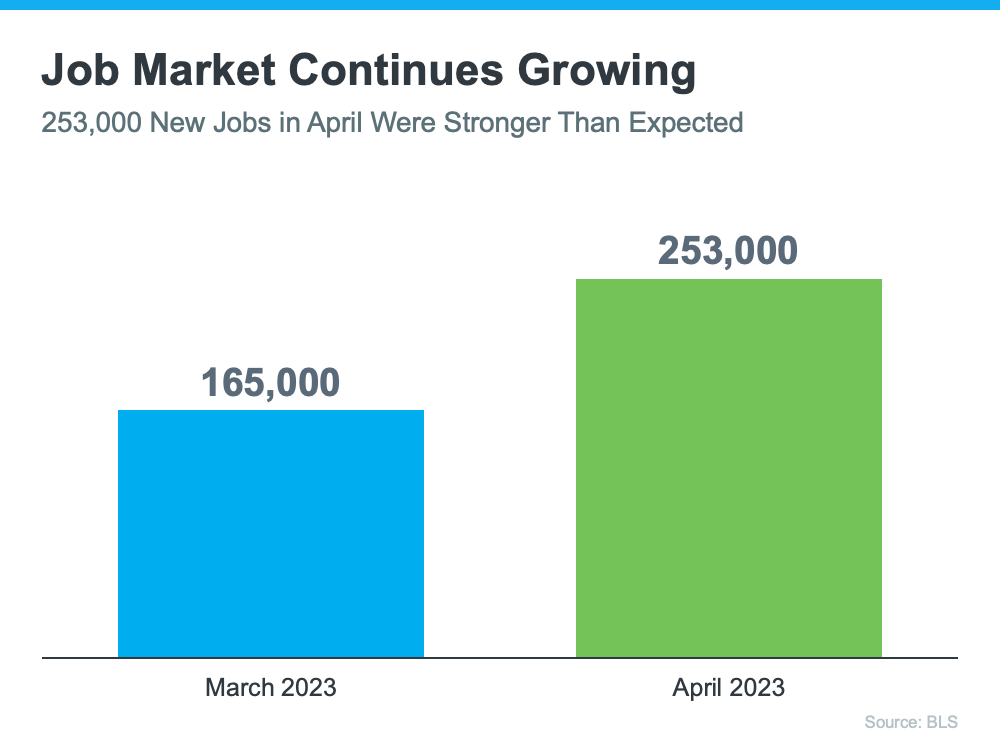
Contrary to popular belief, the job market in Knoxville, TN is thriving. Despite the persistent inflation concerns and the Federal Reserve's interest rate hikes, the reality is that our job market is growing at an astonishing pace. Take a look at the graph below. It shows how job growth has not only been steady but has even exceeded expert projections:
Each month, the Bureau of Labor Statistics (BLS) releases the number of new jobs added to the U.S. job market. In April alone, we saw a staggering increase of 88,000 jobs compared to March. That's not just good news; it's an indicator of a robust and flourishing job market right here in Knoxville!
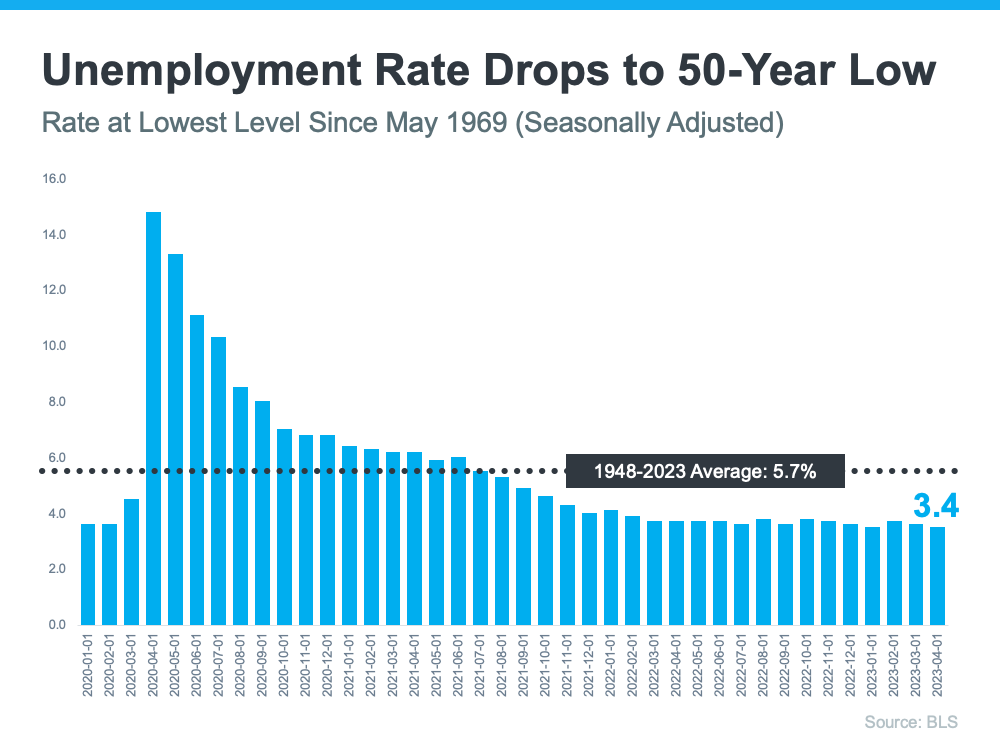
And wait, there's more! Unemployment is at a near all-time low, currently standing at a jaw-dropping 3.4%. That's a historical milestone, folks! Take a peek at the graph below to see the impressive downward trajectory:
With so many Knoxville residents gainfully employed and enjoying financial stability, it's no wonder they're seriously considering homeownership. The stars have aligned, creating a perfect storm of motivated buyers and a thriving job market.
So, what does all of this mean for you, dear homeowners and potential sellers? Well, it's music to your ears, my friends! A market filled with active buyers eagerly searching for their dream homes translates to increased interest in your own humble abode. And guess what? The cherry on top is the low number of homes available for sale.
To embark on this exciting journey, your best bet is to team up with a seasoned real estate agent. They possess the expertise to help you price your home correctly, navigate the offers you'll receive, negotiate like a pro, and minimize any stress or hassle that may come your way.
In a nutshell, Knoxville is brimming with eager buyers, driven by a flourishing job market and the desire for homeownership. Don't miss out on this incredible opportunity! Let's connect and put your house on the market to join the action.
Get ready, Knoxville—it's time to seize the day and make your real estate dreams a reality!
Hey there, fellow home enthusiasts! Ever wondered how much equity you've been brewing in your humble abode? Well, get ready to be spellbound because we're about to dive into the mesmerizing world of Knoxville, TN real estate stats and introduce you to the enchanting Julia Hurley, the broker/owner of JustHomesGroup!
Equity, my friends, is the mystical force that dwells within the gap between your home's market value and your mortgage amount. It's like discovering hidden treasure right beneath your feet. And according to the wise sages at the National Association of Realtors, equity grows as time goes by, thanks to the magical spells of price appreciation and mortgage payments!
But hold on to your wizard hats because this is where things get truly captivating. Your hard-earned equity isn't just a mystical creature lurking in the shadows of your mortgage statements. No, no! It's a powerful ally that can help you conquer your dreams! Need a bigger home to accommodate your expanding collection of mystical artifacts? Your equity can pave the way. Craving a cozier abode to cozy up with your favorite spellbooks? Yep, equity has your back there too!
Now, you might be wondering, just how much of this enchanting equity do you possess? Well, according to the wise surveyors at Realtor.com, many homeowners in Knoxville, TN estimate that they've accumulated a substantial amount of equity. It's like having your own personal treasure chest filled with dollar signs!
And guess what, folks? The mystical data from CoreLogic supports this bewitching notion! Selma Hepp, the Chief Economist for CoreLogic, reveals that even though some regions experienced home price declines, the average U.S. homeowner still holds around $270,000 in equity. That's an extra $90,000 dancing around in their pockets compared to the pre-pandemic era! Talk about a magical windfall!
But wait, there's more! To unlock the full potential of your equity and embark on a thrilling real estate adventure, you need a trusty guide by your side. Enter Julia Hurley, the sorceress of the real estate realm and the brilliant mind behind JustHomesGroup. With her expertise and spells of knowledge, she can help you unravel the true value of your home. Bankrate even sings her praises, highlighting how Julia and her team can work their magic to determine home prices in your area and guide you towards pricing your current home just right.
With Julia's guidance, you'll be equipped with the secrets to estimate your equity and envision the grandeur of your net proceeds. That way, you can confidently embark on your quest to find your new dream home, armed with the power of your equity in hand.
So, my fellow adventurers of the housing market, it's time to embrace the magical possibilities that Knoxville, TN real estate and the bewitching Julia Hurley have to offer. Connect with Julia and let her help you unveil the secrets of your equity and chart a course toward your next home!
Remember, in this mystical realm of homeownership, your equity is the key that can unlock doors you never dreamed possible. Don't let it slumber—let it set you free!
Grab your wands and get ready to make some real estate magic happen in Knoxville, TN!
Hey there, house hunters! Are you feeling a bit discouraged by the limited inventory of homes available for sale? Don't fret, my friends! I've got some great news that will have you jumping for joy.
First off, did you know that the housing market in Knoxville, Tennessee is booming? That's right, and who better to help you navigate it than the amazing Julia Hurley, the broker owner of Just Homes Group? With her expertise and guidance, you'll be sure to find your dream home in no time.
Now, let's talk about the latest data from the U.S. Census. It shows that new home construction is on the rise! In fact, more new homes were completed and ready to sell in the first three months of this year. That means more options for you to choose from. Plus, builders are breaking ground and starting construction on more single-family homes. This means you'll have even more opportunities to customize your home to your liking.
But wait, there's more! When you choose to build a new home, you get to tailor it to your unique needs and taste. You can choose everything from the flooring to the number of sunrooms. And because everything is new, you'll have fewer maintenance and repair needs up front. Plus, incorporating energy-efficient options can help lower your costs over time.
So, if you're having trouble finding your dream home in today's market, it's time to consider newly built homes. And who better to guide you through the process than Julia Hurley and Just Homes Group? Let's connect and explore what's available in our local area. Happy house hunting!
Like, Share and Follow @justhomesgroup anywhere you have social media
Moshe the Chief Geek is my secret weapon when it comes to all things cybersecurity, and on this special episode of ConnectTheKnox, we’re covering all the best practices when it comes to protecting yourself online. Moshe explains how common phishing scams are, and why it’s important that real estate agents know exactly how to protect themselves and their clients. Moshe also gives invaluable best practices for individuals, so that you don’t fall victim to online scams yourself. Tune in to learn more about how simple cybersecurity can be if you have the right tools in place.
Highlights
00:00 Intro
00:44 Moshe describes his background and the importance of cybersecurity
07:36 Julia and Moshe discuss an email phishing scam incident
11:26 Moshe gives his best advice to real estate agents on how to protect yourself and your clients from phishing scams
15:09 Ad - Just Homes Group Realty Executives
16:06 Best options for individuals who want to protect themselves from phishing scams
22:03 Moshe shares tips on the best authenticator solutions to avoid common frustrations and pitfalls
26:53 Moshe recaps the best practices covered in this episode for businesses & individuals
Julia: Welcome, everybody to another episode of Connect the Knox. I’m your host, Julia Hurley, connecting Knoxville to the nation. One of our guests has been a friend of mine for a long time, out of Columbus, Ohio, and I am bringing him on at my request, simply because we had an incident that happened in my real estate company and he is one of the top consultants for cyber security that I have ever met. Everybody, please welcome Moshe out of Columbus, Ohio. Thank you for coming on the show today.
Moshe: Thank you for having me, Julia.
Julia: Absolutely. Can you tell us a little bit about what you do? And then I think after that, I will talk a little bit about that situation and your recommendations for people in general.
Moshe: Yeah, so my background is very often going and helping businesses, small to medium size, anywhere from, we’re talking mom-and-pop to businesses as large as 400-plus employees, and giving appropriate recommendations for their entire networks, from day-to-day operations, just getting, you know, everything done so, “Hey, we can do our job and we can get the bills paid,” to, “Let’s protect our stuff so the money that we’ve now attained isn’t stolen.” Because one unfortunate statistic, I believe, if the numbers—what is it—60% of businesses that get hit with a cybersecurity attack close their doors within six months. Yeah.
Julia: That’s wi—I don’t even know how to respond to that. Just wow, I guess. So, tell us a little bit about what cybersecurity—what we hear, you know, what us lay people here, like, on Twitter or Instagram or whatever, it’s like, oh, hey, make sure you use a Gmail account and have two-factor auth—you know, authorization or whatever. What is that? That doesn’t do anything.
Moshe: Well, the thing about cybersecurity is, like, if you’ve ever seen the movie Shrek when he’s talking about ogres are like onions, where it’s about layers, the same thing is with cybersecurity: it’s about having layers of security. So, when people say, “Well, you seem, like, a little bit paranoid,” most of the people in the cybersecurity field, what’s today’s paranoia becomes tomorrow’s standard because it wasn’t too long ago, where people were saying, “Hey, having an SMS two-factor code is a little bit much.” Now, we’re saying don’t use that at all; it’s insecure. And we’re now moving on to different methods.
The most important thing is to be proactive, not reactive. The honest truth is, by the time you’re reacting to a cyber event, such as the event that happened with you, it’s a little bit too late because the damage is usually done, either reputation, monetary, or infrastructure, there’s so many things that can go on. So, the most important thing is, really, for the average person when we’re talking about this situation, is be mindful of, one, what data you’re putting out there, and two, where you’re putting your data. So, while you know, we may have Gmail out there that is the common one everyone uses, the problem is, if you’re not paying for it, you’re also the product. There’s definitely products, like, I personally use like proton.me, which is based out of Switzerland.
They actually—like, they encrypt the email to the point that if you have to reset your password because you forget it, you will lose all the data you had. They do have a free account that’s, like, 500 megabytes. And you know, that’s a nice way to start because if the infrastructure then gets compromised, your email is then protected. But on top of that, yes, there’s two-factor, there’s also being mindful of what your passwords are, which is why I then tell people you shouldn’t—you know, like, you see on camera, I have this as a joke. It’s a book of internet passwords. This was sent to me by a friend. But the premise is what you want to have, you just shouldn’t have a book. This is a little gag gift—
Julia: Look over this way because we can’t see you. Your camera is in a different position than we are, I think.
Moshe: So—here, let me—but yeah, so the idea is, you do want to have different passwords for everything. So, one thing I recommend is there’s a product called Bitwarden. It is free for personal use; they do have a business version that you can pay for, they have a professional version for personal users you can pay for. And if you’re technically savvy, you can also self-host your own Bitwarden server at no cost. So, there’s many different ways. You’re basically just paying for them to host it for you.
I actually deploy that to many businesses and you can have that to your team and it generates the password for you, so then all you have to remember is the master password. Which these days, you should generally be thinking of a passphrase at least, like, 16 characters. Because the honest truth is, it’s very easy to brute force a lot of these different passwords. And for the love of God, don’t make it things that are very easy, that we can, you know—if somebody wants to target you, for example, one of the easiest ways they will go about, if you—if they’re trying to specifically target you is through phishing is, they’re going to gather your information.
People give a little bit too much info on social media very often, to the point that when we’re talking about cybersecurity, one aspect of it is physical. Don’t post your actual physical key on a picture because the reality is people like me have 3D printers, we can trace that, we can copy that from a picture.
Julia: What are you saying? Don’t post what?
Moshe: Don’t post a picture of your key. Like, your actual, like, your actual physical key. Like imagine you have somebody who is malicious intent, like, a stalker or something like that. So, they’re holding up you know, your key, like, I got my apartment, I got the house. That’s why the first thing you should do whenever you get a house, you get an apartment, change the locks immediately.
And for the love of God, go to an actual locksmith. Don’t get any of these smart locks. I’m an IT guy; I’ve dealt with the smart locks. I will tell you, nine times out of ten, it’s better to have a good lock with a good, you know, what do they call it, like a… there’s a certain pin or whatever they call it that keeps you from picking it that easily. It’s not foolproof, but it’ll give you a little bit of time.
Get yourself a decent alarm system from a local alarm company. I’m telling you, there’s many great ones in every city. I’m pretty sure when I go down to Knoxville, I could probably find a few that I could say, yeah, I’d work with these guys or these guys. Don’t work with these big alarm companies, you know? Like, you probably hear of ADT.
Julia: They are crazy.
Moshe: They are crazy between the contracts and everything. Find a local alarm guy that you can actually take out the coffee that’s in your community. I have one well—I had one unfortunately, Covid, but he was the one that helped me set up my system. And it’s because of him, I got to learn more about how the systems work, which made me more comfortable with it, especially when the business transitioned over to another local security company. But the important part is, like, for example, I had an issue with my alarm system—and this is why I emphasize always working with the local MSP a local security guy—I actually got to hold them accountable for when my alarm didn’t trip, when my dog set it off and we found out, like, a sensor was faulty or something like that.
It was really much easier to deal with him. I got one email off to him, I dealt with him on his cell phone. There wasn’t this, “Oh, let me get my supervisor,” any of that. So, when it comes to cybersecurity, like I said, there’s many different layers to it. We’ve already hit on, like, different points. There’s password managers, there’s email, there’s even, like, being cognizant of what you put on social media.
Julia: So, the instance that happened with my buyers that we posted on TikTok, we had over fi—we had half-a-million likes and over, I don’t know, 300,000 comments. And the conversation basically—
Moshe: That went a lot crazier than when I saw it, then [laugh].
Julia: Yeah, it’s been a lot. And I have personally received about 2000 phone calls and text messages from real estate agents across the country asking me how I got the money back. And I got the money back.
Moshe: You’re luckier than most.
Julia: I am very lucky. We lost—well, ‘we—I didn’t lose anything. So, the buyers lost 10,000 total dollars that had already been transferred out. So, out of $120,000, they got back $110,000 in four weeks. And the work and effort that I had to put in to getting that money back—
Moshe: But that’s also because you were right on it and you probably had still a few things that were just, by the grace of God, in your favor.
Julia: Yeah. And it’s very rare that that happens. But what had happened is that somebody’s email got phished. And because I use the product that you talked about, I know it wasn’t me. And the lending company has financial information and their IT department confirmed a hundred percent in writing that it wasn’t them.
And both of my buyers, which I have permission to disclose, worked for Oak Ridge National Lab. So, that is a government-led facility, and we know that their emails were not compromised. So, that left one particular company that was involved in this whole situation, unfortunately, somewhere got phished. And so, the email that was sent out to the buyers only had this particular company on, it didn’t have me, it didn’t have the lender, it didn’t have the other realtor, it didn’t have the builder, it was just from this company to the buyer that said, “Hey, here’s your wire transfer. Wire this money to this account.” And even though my buyers are savvy people, they just did it.
Moshe: So, just for clarification, was the email that was actually sent, was it from their domain that they had—
Julia: Yeah.
Moshe: Oh, so they had a business email compromise. Okay. So, probably what had happened was there’s multiple factors that go into this. Again, I don’t know the environment, so I’m just going off of my experience.
Julia: Well, here’s the situation. So, they did it and they didn’t tell anybody. I literally talked with my clients every single day and they didn’t tell anybody they did it. I talked to them for three straight days, did not tell anybody that they had done it. We get to the closing table, obviously asking where their money is, and they’re like, “We wired it.” Everybody’s floored. Everybody’s is floored.
It was like, “You did what now?” When did you do that? [unintelligible 00:10:19] from the email. And I mean, there’s a wire—let me tell you, as a real estate agent in Tennessee, we are legally required to do the wire fraud form. It’s three pages. I read all of my documents to my clients.
Basically, our disclosure says, don’t wire your money unless you call, don’t wire money unless your real estate agent calls you, or your banker company—it’s very specific, don’t do this. And I don’t know how that—I just don’t know if they were just caught—I don’t know, but it got done. So, their money was gone from Bank of America to Regions Bank. It was the day before Thanksgiving. Thank God it was a holiday because Bank of America usually just says, “Here’s the wire [unintelligible 00:10:56].” Regions is a local company—I mean their national, but there’s a lot of them locally here.
And the effort that we have all made in the last four weeks to get that money back. And so, many people on that TikTok video, I mean, hundreds of thousands of people have commented on that, half a million people in the country. And a lot of them were like, “This is an inside job. Somebody got hacked. This is a phishing scam.”
How can you protect this? And so, real estate agents do use Gmail, AOL, Hotmail, which I see all the bleeping time, please don’t do this. And so, that’s why I wanted to have this conversation with you is, can you please give the best advice for real estate agents and consumers who are not savvy, how to use the correct email addresses, where protect those email addresses, and what to do?
Moshe: Yeah, so from a personal standpoint, I talk about proton.me. From a professional standpoint, I recommend Microsoft Office 365. The reason why is with real estate agents, it’s mostly about compliance. And Microsoft has the mechanisms inside of 365—to be specific because I know it gets confusing, there’s a personal 365 and there’s a business 365; I’m talking about business 365, not personal 365—that’s the one that constantly $6 per user per license—I mean per month—and it goes up to—you got—then there’s Microsoft 365, which I’ll get into that in a little bit. They have the naming confusing, but we’ll get into that. 365 basically—
Julia: Yeah, Microsoft’s not an easy product to understand.
Moshe: And this is why you need to have a partner in IT. The term you’re going to mostly find when you’re a real estate agent is called a managed service provider or what’s also revolving now into a managed security service provider. If you’re dealing with insurance, which is one thing a lot of real estate and other businesses don’t know, typical business insurance does not cover cyber. Cyber liability is a whole different policy. So ransomware, things like that, does not fall under business.
If you get your—I think most business policies I looked at, when you look at the electronics and all that, they cover, like, 10, $20,000 overall. It’s like, you will be—that’s why a lot of businesses close their doors. And then cyber liability insurance, they have been really, really cracking the whip on businesses to get the cyber liability insurance, that they actually want to talk to the IT companies, understand what your response plan and everything is because cyber liability insurance doesn’t just include, oh, you know, if you know the money is covered by ransom. No. It covers the legal side of things when you have to deal with the lawyers and everything to deal with the state response depending on, you know, what goes on, it also has to deal with the PR that’s going on with there, the notification, the response to all the people that were affected, the forensic analysis of everything, the rebuild, and the replacement of any hardware and/or software.
And the reality is most businesses, I’m not going to joke with you, from an honest experience when it comes to real estate and most small businesses, when I come in, they are miserably failing in the cybersecurity aspect, to the point that they are… they’re basically just on borrowed time. And there seems to be this very bad mentality where… I don’t know if you can call it [hippy or that 00:14:19] where it’s like, if I don’t put bad energy out into the world, it’s not going to come seek me. Well, the reality is, most of these attacks are automated and they’re merely just looking for the lowest-hanging fruit. I can pull up my firewall over here, you’ve seen my videos, where it’s like, what the heck does this guy have hosted? And I’m like, “Oh, this is just running my little things, like, there’s nothing major,” and I’m getting hit by tons of things.
Julia: So, as a real estate agent who is on average, 60 years old, okay, so let’s just be honest, the real estate agent industry is aging, just, like, the rest of the country is aging, proton.me—right—proton.me is a really good start for them.
Moshe: Yeah. It’s a great start. But if you’re in real estate, seek out a local provider that’s a managed service provider. You want to find—the honest truth is you don’t want to go with a one-man shop. You want to find somebody that has a team [audio sync problem 00:15:12] bond.
Julia: We all know that real estate is location, location, location. Our team at Just Homes Group Realty Executives have the true expertise, pairing buyers and sellers with the right opportunities. Whether you’re looking to buy or sell a home right here in Knoxville, Lenoir City, Clinton, or Farragut, we have the expertise throughout every Knoxville surrounding area. Call just Homes Group Realty Executives today.
Julia: You legally have to be under a broker, so the broker has to be protected as well. Let’s say, for example, you know, Realty Executives—which is who I’m with—Realty Executives is—you can get their service, it could be your-name@realtyexecutives.com. I have protected email. I have my own stuff, but I have an entire department for me that runs my stuff because I’m three businesses hidden under this one corporation name. But not every real estate agent has the ability or financial ability to do that. As an individual, what’s their best option?
Moshe: As an individual—well, if you’re just an individual and you’re not running it as a business yet proton.me, two-factor email, checking the headers of the email, which basically just means rather than just saying like, okay, Julia sent me an email, expand the email; is that her actual email? Is that the one that she normally sends from? And when I say pay attention, is that an I or an l?
Julia: Because the email that my buyers received was, this business name dot cam—C-A-M.
Moshe: Yeah. There’s just so you know, there’s businesses out there like Markmonitor and such that big companies spend tens of thousands of dollars a month for that literally, all they do is they just try to find domains that possibly could be used to phish and buy them proactively for clients. Like, that’s how serious the phishing problem is. And for businesses, I mean, there’s really no way around it; you need to get an IT, whether it be in-house if you’re large enough and you can afford that—generally, I don’t recommend that until you have like at least 50, you know, employees to cover that—there are some real estate agencies that are that big, some, you know, that they work better with what’s called a managed service provider, where they become the IT department for a contract; you get a few people, it cost you less than hiring a person.
Julia: Well, a lot of the bigger firms have it. What we’re finding is that a lot of the real estate agents want to use their personal email. They want to make one up.
Moshe: Don’t do that.
Julia: I cannot stress that enough. Every time I see a real estate agent in RMLS with their name at AOL, or their name.realtor@gmail.com, it’s—Gmail is good, don’t get me wrong, but they have just recently incorporated two-factor authenti—I mean just.
Moshe: Gmail has had it for a few years. There’s other issues with just how Gmail handles things. But regardless of that, don’t use AOL, period. Don’t use Yahoo, period. Hotmail because it’s Microsoft, it’s kind of a weird thing. Your grandf—you’re, like, on the Microsoft Office ecosystem, but not. You know, proton.me is free.
But the biggest suggestion I have for anybody—and I do this for myself—I have a personal email, I have the [chiefgyk3d 00:18:32] email that you know, I have the email that I get from whatever my job is. You know, I keep everything separate because people only need to know what they need to know. And then there’s extensions like SimpleLogin that if you pay for proton.me for, you know, the paid-for plans it comes with, and it allows you to actually make alias emails so that it just forwards to your email and then they just have a dummy one in there.
Because the thing is, you sign up to all these newsletters, you sign up to all these places with your email. They have your information. That goes out there somewhere. It gets leaked or breached or sold or something like that. That’s compiled in some database somewhere, that’s how they hit you with all these phishing emails.
Like, if you’re in—a lot of people, like for example, aren’t familiar with cryptocurrency, but there was a big, you know, compromise a few years ago with one of the vendors for cryptocurrency. The only thing of mine that got leaked was my email, nothing, you know, too vital, but ever since, I’ve gotten cryptocurrency-related phishing emails because of that breach. And that’s where a lot of these attacks come from is they’re just looking for different things. So, for personal use, I cannot stress enough have different emails, don’t use the same passwords for them. And you—
Julia: And get a password book.
Moshe: [laugh]. Well, Bitwarden specifically is the one I would recommend but yes. And, you know, Bitwarden is really inexpensive for families. I think they have, like, a plan for $8 a month for five people or something like that. I’m not affiliated with them. I just like their product. But at the end of the day, they’re looking for those [unintelligible 00:20:01]
Julia: And what would that be? Let’s just say for example, grandma wants to set up an account so she can open her Facebook, so she can open a—it’s just to stay in touch with the family. So, explain it.
Moshe: Well, with Facebook, there’s their own little things. Like, one, grandma has to know not to put too much out about the family. If she puts photos out, be careful of what’s in the photo because you would not be—you would be surprised how many times there has been mortgage fraud and things like that related to documents that were out in the open and people weren’t paying attention. Or, you know, people showing off their tax refunds not realizing, hey, there’s your social right there. You know, like, you see it all the time.
Julia: That’s [laugh][unintelligible 00:20:42] do this. That’s hilarious—it’s not hilarious. But it’s hilarious that these things, this is just not something that we talk about. It’s not something that my age group grew up with. We didn’t have this kind of stuff. I had a cell phone that weighed ten pounds in the car and only worked after 9 pm.
Moshe: Well, I’m a ’90s kid. I mean, when we took photos, we took photos for us. And it’s a weird concept for a lot of people to understand that when you put something on the internet, it’s not there just for you.
Julia: It’s out there for the world.
Moshe: Yeah. And at the end of the day, the cloud is just another person’s computer. That is what you kind of have to understand. I’m oversimplifying it, but—excuse me—at the end of the day, it’s your data on their infrastructure, so you got to be mindful of that. Like, there was the iCloud leak a while ago with a lot of the celebrities. That happened; they had their data up there.
I’m not going to comment whether they should or shouldn’t, you know, be doing that thing; that’s, you know, everyone’s personal decision, but the fact is, their data was up there, and the risk is, because it was up there, people could have access to it. And that’s all I’m saying at the end of the day, is about having layers. In the case of the iCloud thing, I believe a lot of them didn’t have two-factor enabled. So, two-factor I—for many people that aren’t aware, basically just means when you type in your password, it’s just going to ask for another factor of verification. So—
Julia: Oh, and just for a quick reminder for anybody who finds themselves in the same situation I did, I got Google Authenticator and I loved it. Except when I got a new iPhone and I was unaware that I needed to not erase the first phone first and then send it back I needed to have started the second phone, taken a photo of the first Google Authenticator, and put it on the second phone. Because now I can’t log in on my desktop to—on my desktop only, thank God, because my phone has my facial login and a whole different set of logins—but on my desktop it asks me for the Google authentication six-digit and I can’t get it because I can no longer log into Google Authenticator on my new cell phone because I did not take a picture of the first one from the old cell phone which was then completely erased; that information is gone. And I think that is something that people need to understand. Once it’s gone, it’s gone.
Moshe: And that’s one reason why I like Bitwarden a little bit better because you can put that two-factor code—or TOTP; timed one-time passcode—in Bitwarden. Now, there’s a whole ‘nother discussion if you want to keep the TOTP in the same place as your passwords. That’s a whole other debate. You can get into, you know, making your own databases all that, but the basic knowledge is that you should have two-factor.
And that’s actually what I have in my hand. These are Yubico YubiKeys. These are just—full disclaimer, yes I am affiliated with them, but they’re like an industry-standard in IT now. Like, every IT person is going to go, “Oh yeah, YubiKey.”
Julia: What is it?
Moshe: These are YubiKeys.
Julia: YUb—spell it.
Moshe: They are made by Yubico. Y-U-B-I-C-O. They’re called YubiKeys. They are hardware security keys. I got a bunch of them because, you know, I’m affiliated so they give me a bunch. But every one is unique.
Now, when I say they’re unique, the new standard is that instead of that one-time passcode, each key is unique to the point that I have to register it and then I actually have to physically press—there’s a little copper contact there—to actually let me in. So, you have to have physical access to this key. If I lose it or it breaks, I’m SOL, which is why I have several for backup. The other thing is this can store 32 of those TOTP like the Google authenticators—
Julia: Is that [unintelligible 00:24:36] a USB port or phone?
Moshe: Yep. So this is the YubiKey 5C. So, this is NFC plus a little USB-C. This is the 5Ci, so it’s a lightning connector for iPhone as well as USB-C. And then this is just the regular plain old USB plus NFC. And then I actually have another version I was playing with over here. This is their PhytoKey, that’s Yubico Bio, which is actually it’s—camera doesn’t like it because it’s all black, but it’s got a fingerprint reader on it, so I can actually tie it to my fingerprint to actually log in. So, rather than just having this and then tap, it actually has to be my finger.
Julia: That would be my preference.
Moshe: So, there’s many different ways. Plus, Microsoft and Apple are introducing new requirements for logging in. There eventually—Apple wants to actually have two-factor hardware security keys like this, but they’re actually going to be adding it into the hardware, both Microsoft and Apple. So essentially—
Julia: So, our iPhones would now be $7,000 [laugh].
Moshe: No. It’s going to just basically have the ability for you to take a biometric or something so that way, we can have more secure ways to log into our actual computers. Because, you know, a password is so easy to get into a device. And, you know, that’s one of the things that also a lot of these people, as real estate agents, have to be aware of is, you know, your device security, operational security with your devices, you’re going around, how valuable is the data on your phone, how compartmentalized that data, and if God forbid, your phone or your laptop or something is lost—because most of the computers that you buy—if they’re Windows, they don’t have a feature called BitLocker enabled unless you turn it on which, it encrypts the entire laptop. Which means even without the password of the laptop, I could still just pull the hard drive out, literally just open it up, take the hard drive out, shove it in one of my computers, and I got access to all your documents without any effort.
So, you got to think about if you have a malicious employee, things like that. And this is why we, you know, say we recommend businesses work with managed service providers or have IT: because they need these IT policies and compliance because there’s a lot to get into.
Julia: Let’s recap. Real estate agents, individuals, small businesses under 50, what was it? What do you recommend?
Moshe: For businesses, definitely look into hardware security keys, like, the YubiKey. For general for businesses, I would say, Microsoft Office 365 for your email infrastructure and an MSP. For an individual, maybe proton.me. Definitely two-factor for everybody, whether it be for business, a YubiKey, or the two-factor.
There is Microsoft authenticator, there is Authy, there’s Google Authenticator, there’s several that are great out there. A password manager, of course, whether your business or personal. I like Bitwarden. That’s what I would definitely recommend. Be mindful of also what you put out on social media. Read every email, so don’t trust everything you see. Just because it comes into your inbox doesn’t mean it’s actually, you know, something you should click on. And when in doubt, don’t do it. That would be my general advice.
Julia: —[unintelligible 00:28:02] like a scam, it’s probably a scam. It’s the best advice, like, when you get that pit-in-your-stomach feeling you know it’s wrong, listen to that feeling.
Moshe: Yeah. And like, when I said when in doubt, don’t do it. If you don’t know what you’re doing or anything, don’t click on a link because there’s so many things that can, you know, they can just hijack with a click to open up. Just the best thing to do is when in doubt, call. So, like, even, for example, I once in a while get the, you know, false fraud attempts, where it’s like, “Your credit cards been compromised,” and they’re calling to, you know, actually, you know, defraud you, don’t answer that call. Hang up.
Julia: And then call the credit card company.
Moshe: Call the credit card company and ask, “What’s up?” Go in to the bank. Don’t, you know, deal with anybody on the phone. Microsoft will never call you, unless you’re in an IT business and there’s an audit, but that’s a different issue [laugh].
Julia: [laugh]. You have to go to the offices in Austin and wait outside [laugh]. Anyway. All right, less than 30 seconds. I really appreciate your time today. I want to make sure to put all of the links of all the products that you’re talking about, so please send those to me individually. I will add those to this. Thank you for taking time out of your day to help people understand how to protect themselves and their clients.
Moshe: Well, it’s been my pleasure.
Julia: Guys thank you for Connecting the Knox, connecting Knoxville to the nation. And thank you sponsors for sponsoring our channel today. And if that YubiKey people, we may hit them up for sponsorship on this podcast so [laugh]
Moshe: I can get you in touch with them.
Julia: [crosstalk 00:29:34] a new sponsorship for now. Thank you so much. I appreciate you.
Marissa Kalsey is a pole vaulter and Olympic hopeful who moved to Knoxville to train with world-class coaches. In this episode of ConnectTheKnox, we explore how living in a central southern location like Knoxville affects training for track and field athletes. Marissa also describes the risk involved in pole vaulting, and the intense qualifying process athletes like her go through to compete at the Olympics. Tune in to learn more about the track and field community in Knoxville, as well as Marissa’s favorite local hangouts.
Highlights
00:00 Intro
00:36 Marissa explains how she moved to Knoxville for Olympic pole vault training
02:04 Marissa describes what the Olympic training process looks like here in Knoxville for the pole vaulting program
05:30 How Knoxville differs from where Marissa grew up in Pennsylvania, and why our central location makes travel for fun and pole vault meets convenient
08:26 Julia asks the question on everyone’s mind: How heavy are pole vaulting poles?
10:24 The equipment used in pole vaulting and the potential for injury in the sport
14:55 Marissa explains the process of qualifying for the Olympics
17:31 Ad - Just Homes Group Realty Executives
18:14 How the pole vaulting and pro athlete community is growing in Knoxville
24:38 Marissa’s favorite spots around Knoxville, including Three Rivers Market, downtown restaurants, and more
26:06 How the ConnectTheKnox audience can support Marissa’s Olympic dreams
Transcript
Julia: Hi everybody and welcome to another episode of Connect the Knox. I’m your hostess with the mostest, Julia Hurley, connecting Knoxville to the nation. Today’s amazing guest is Marissa Kalsey. She’s right here in Knoxville, Tennessee and she is an Olympian-trained pole vaulter, Something you would not think of for Knoxville, Tennessee. Marissa, thank you so much for coming to be a guest on our show today. Tell us a little bit about you and how you ended up in Knoxville.
Marissa: Thanks for having me, Julia. So, I’m a pole vaulter training in hopes for the Olympics; I train full time. And I moved here to Knoxville about four years ago now, in 2017. And the prior coach that I had moved for, his name was Tim Mack and he was an Olympic gold medalist and that’s kind of what brought me to Knoxville.
Julia: Where did Tim get his—where was he?
Marissa: He was in Knoxville. He coached at UT for a little while—
Julia: Okay.
Marissa: —and then, now currently, I’m training with Mark Hollis, who is another world-class pole vaulter. And yeah, so I’ve been here for four years, training and working towards that goal.
Julia: Okay. So, does Knoxville have a pole vaulting team? Explain Knoxville’s pole vaulting family here. That is something that I was unaware of. I know that we have an outdoor track, which is when it’s hot outside, very popular. But we do not have an indoor track to train Olympians. How did you end up here? And how did Mark end up here?
And tell us a little bit about what that training entails, really, for you because I knew athletes in general train seven days a week, nearly 360 days a year. I’m sure that’s no different from you, but there is a big difference in a athlete and an Olympic-trained athlete. So, tell us about that process and how that works out in Knoxville.
Marissa: Yeah. So, I moved here when I knew that—I came in, let’s say it would have been college that I first came here to visit because I knew that Tim Mack had a group of elite athletes and a program where he had people come from wherever and train and work with him and get the opportunity to learn from him. And he was a very well-known pole vaulter. I’ve, you know, watched him on videos, and same with Mark, but Tim at the time was the one I knew. And Mark was training with him. He was actually still training when I moved here as, like, what I’m doing.
And so, I moved to work with Tim once I had a session with him and I came here to visit for a couple of weeks and really just tested it out and I loved it. And I ended up moving and staying here. And I realized what a big community it was. I met some of the other vaulters, some that graduated from UT Chase Brannon and Kelsey [Obie 00:03:05], and there was an entire group that was training to do what I wanted to do. And so, that’s kind of what convinced me to think, “Well, this is a perfect atmosphere to be able to do that and work towards that goal.”
Julia: Where do you all train? So, in my mind, okay, in my mind as I have gone to several UT track—I support all the UT athletics, so we go to the track needs. However, I would imagine in my head, kind of like the tennis facility at UT, that the ceiling to train indoors needs to be extremely tall and that you all are just—hoo—galavanting over [laugh] these—[unintelligible 00:03:45] like magical gazelles. It’s just—so where do you will train all year long? And what really physically and mentally does that look like?
Marissa: Yeah, we have multiple places we train. Now, since my coach is the coach at UT, we have the opportunity to be able to use their indoor facility and their outdoor facility. Prior to that, we were kind of hopping around looking for spots. Because you’re right, you have to have a high enough spot. We trained in [Deewan 00:04:18] there for a little while.
And then we trained in my coach's backyard. He has a pit, so we train there outdoors. Clearly it was not—it was a perfect situation for when it was warm, but whenever it was cold, we kind of pushed ourselves through the cold weather and just made it work for that year. But now we have the opportunity to have just a nice indoor and outdoor facility, and we train in the weight room as well over there.
And we also do gymnastics. I just got done with gymnastics here this morning. We do over at Gymtek, we do a lot of things that connect that, like, upside down and body awareness, those feelings that we have to feel in the pole vault. And it really has a very close connection. Actually, a lot of prior gymnasts are now pole vaulters. It’s a very—the sports are very linked.
Julia: That makes sense now that you said it. It’s not something I would have ever connected. And Knoxville—and this is something I know because the kids—Knoxville has a massive gymnast community.
Marissa: Mm-hm.
Julia: So, this makes so much more sense. So, where did you come from originally?
Marissa: So, I came from Pennsylvania—
Julia: [crosstalk 00:05:31].
Marissa: —before I moved here to train. Yep.
Julia: That is super interesting. So, what are the biggest differences between where you were and where you are now?
Marissa: Yeah. That’s a great question. I think, here there’s a lot more for me to do versus—I mean, I grew up in Pennsylvania about an hour south of Pittsburgh. So, it was a smaller town, whereas here, there’s a lot to do. And it’s a growing area and I love that about Knoxville.
I just feel like you know, all the breweries and all the restaurants that are coming about, there’s just more and more I feel like every year that I live here, I just keep finding more places that I’m like, “Oh, I want to try this place. I want to go here.” And so, I love that about here. I also love that it’s a very central location, which helps me for pole vaulting and also for fun and travel. Because Asheville is not far, Nashville is not far, Gatlinburg.
So, I’ve met friends or people, you know, traveling through there or just gone on a visit or a weekend trip. But it’s also a very central location because I’m traveling to a lot of meets. Sometimes over in Atlanta, sometimes—I mean, I’ve been kind of to every state, but it’s a location that’s not, you know, it’s not all the way on one side, but it just kind of gives me access to a lot of different areas. And being in the south, too, it helps weather-wise compared to up north. There’s a lot more opportunity, you know, in the outdoor season to have competitions that you can really go back to your long run and really feel like you’re competing at a high level. Because you need good conditions to do that.
Julia: You said, “Long run.” What is that?
Marissa: [laugh].
Julia: All right, we’re getting into the [unintelligible 00:07:17] now.
Marissa: Yep. We’re getting into the details of it, the specifics. It’s like… so you have your shorter run, which is kind of like a drill run, it’s your practice run, it’s a way to—you don’t have as much speed so you don’t necessarily get on your bigger poles, but you can work a lot and focus in on technique without the worry of having to have your step be perfect. Because your step has to be in the same place every time, or around the same place every time when you jump, for it to be a good jump. And so, it focuses it allows you to focus less on the run and more so on executing. And your long run is more of your competition run. But it’s a little bit more challenging. You have more speed, but it has to be a little more exact because you’re on bigger poles and you have more room for error in that amount of distance.
Julia: Interesting. All right. I’ve got some really technical questions that no one else is going to want to know about, but I am one of those people that this is a Connect the Knoxville podcast, but I want to know, how heavy is that pole? It looks massive.
Marissa: Yeah, that’s a great question. I mean, like, I don’t know how to say pound-wise, I don’t know what it would be, but they’re not that heavy. But the bigger poles that you get to, the heavier they are. And they’re not labeled by weight of the pole. They’re labeled by weight of what it’s like necessarily saying you should be.
Julia: Kind of like a horse?
Marissa: Yeah.
Julia: If you weigh 200 pounds, you cannot be a jockey. This pole will not hold you.
Marissa: That’s exactly what they kind of go for, yeah. Like, I jump—I don’t necessarily weigh 150 pounds, but I jump on 150 or 155, sometimes a 160. But, you know, it’s kind of more of a gauge for especially the younger vaulter, when you’re, you know, when you’re in it at the start, it’s kind of a gauge for where you should be, which pole you should be jumping on. So, I don’t necessarily know how much the pole itself weighs. It’s pretty light until you get to—it gets heavier as you kind of get to your bigger poles.
But I mean, I will say when you’re carrying it, you just kind of have to carry it straight up and down because that allows you to, like, have all that weight just lightly, I guess it’s more in your hands. Whereas when you’re dropping it and if you can imagine, like, coming down, it’s really in this bottom hand and that’s where it gets heavy. But the whole point when is to just drop it quick and, like, let it fall as your arms are going up, and it feels a lot more weightless when you drop it correctly.
Julia: Okay. So, something I also did not know, and I’m just going to share this because I feel like I’m always the person in a classroom at the age of 41, learning, and I always ask the questions that I think people think about, but they don’t want to ask.
Marissa: Mm-hm.
Julia: So, I thought—in my head—for 40 years, that the pole that you—the thing you jumped over, was like a metal bar and that it was not flexible and it didn’t move, and that when you hit it and it bounced off that you all were taking major injury. Not that it’s not an injury, but in my mind, when I saw that happen on the Olympics and when our kids got into track and I actually saw it, I was like, “Oh, that moves.” Explain that process because I really thought this kid was floating at a track meet in Houston.
Marissa: That would be—that would actually be an entire other element. That would be kind of, I guess it would be kind of scary at times like you said. But I’m sure a lot of people think that because, you know, you don’t see it fall down every time; of course when you make it over, it stays up. But, yeah, it moves all different ways. It moves up and down, it moves, like, forward and backwards because—so those are called standards when it moves forwards and backwards.
It just depends on the person’s jump, and it depends on how high you’re jumping. Because typically, the higher you jump the standards—I mean, not always, but the standard sometimes move up. Whereas, you know, when you’re jumping at some of your lower heights, sometimes you have them back but as you get on stiffer poles, you need them up a little bit. So, you adjust it to your jump and you know yourself and you know when you clear a certain height, typically your standards need to be at a certain place. And then it also moves up and down as you compete.
Julia: In my head. I had imagined, like, what is that? In gymnastics where they’re on the balance beam [crosstalk 00:12:15]—
Marissa: Yes.
Julia: —like a brick and it doesn’t move, I had imagined that’s what—my whole life—that pole vaulters, God bless their hearts, were jumping and they were hitting this brick wall and they were getting, like, I could imagine bruises. I was like, “Oh, my God, this is terrible.” Come to find out it is still a bar, but it does move.
Marissa: Yeah, it drops right off. Especially, it depends which way you hit it. I mean, a lot of times if you come down on it, the you know, your body, your weight, kind of sometimes will keep it on sometimes it’ll hop up and down. And you sometimes scrape it on the way down. But it doesn’t—you know, again, it does fall off pretty easily. If you were a lot of times going over, if you kind of just hit it with your side or your legs, it’ll pop off there. But I can’t imagine. That would be a whole other element that would be terrifying.
Julia: [laugh]. To be honest, the relief I felt from years of watching Olympians, in my head, had thought when they were jumping the pole, that it was this metal bar. They were getting so injured in my head. I was like, “Oh, those poor people. Oh, God that looks—I hope they’re—like—”
Marissa: “They’re really going for it.”
Julia: —[crosstalk 00:13:24] ribs. I was, like, terrified. And then I saw it last year when the kids was at the pole vaulting championship in Houston, Texas, and I was like, “Oh.” That is a major relief of childhood worrying on the all these Olympians my whole life. So—
Marissa: That cracks me up [laugh].
Julia: And I thought of you immediately. I told Joe, it’s like, “You have to tell Marissa this because this is hilarious.”
Marissa: [laugh]. That is really funny.
Julia: Very good. It’s not a metal bar that’s causing back-breaking injuries, which is what my whole life I thought you were all going through. So, that is even—and in fact, two things went through my mind. I was like, okay, well, that’s not as injure-possibility as I thought it was going to be, but two, the skill level now that I know that thing is light and moves, I was like, “Oh, that’s even harder.” So, then I was like, “Oh, the skill to go across that,” and just the air, I bet the air that pushes across it could just push that thing right off. I thought, “Wow.” [laugh][unintelligible 00:14:25] to just see [unintelligible 00:14:27] on TV, you’re, like, this close from touching it, and I’m like—now I’m watching it like this [laugh].
Marissa: [laugh].
Julia: What are they doing? So, I’m so glad, just in case anybody else out there outside of Knoxville, Tennessee, wants to know, that’s what the pole does. And it moves and it’s safe and it’s okay. So [laugh].
Marissa: Yeah. That’s hilarious.
Julia: Always learning something here on Connect the Knox. Hey, where do you go—so as an Olympian, as and Olympia—you’re training for the Olympics and I believe you were this close last year. Tell us about that experience. And where all do you have to go to qualify? Tell us about that.
Because you know, when you have to qualify, let’s say, for the Boston Marathon, for example, you have to qualify in two or three different marathons throughout the country to be cleared for even applying for the Boston Marathon, let alone qualify for it. So, I would assume that sport is kind of the same. Where do you qualify? How do you qualify? What is that whole process?
Marissa: Yeah. You’re correct. There are multiple meets that you need to—in competitions—that you need to qualify for the Olympics. So, the first one would be a Olympic trials. So, that year that I was two inches, I was two inches from the Olympic trials, which, once I go to that meet, that’s where you qualify to go to the Olympics.
So, I had one more step in the process that I was a couple inches away from. So you, before—or to qualify for the Olympic trials, they take the top, it’s 18 to 24. It depends on the year, but I think that year, they were taking 24. And so, I was a couple spots away from—they take the top 24 in the US. And that goes to that group of people, women and men go to the Olympic trials, which is typically in Eugene, Oregon.
But every year, they have a competition that is the same—it has the same idea where they take the top vaulters in the US and you all go compete. But that year is the year that it’s the trials for the Olympics. It’s only, you know, every four years, of course. So like, this year, I’ll have that same USA Competition; there’s just no Olympics after that. You are trying to qualify for the top spot in the US, though.
Julia: Well, that helps I would say.
Marissa: So once—
Julia: Kind of helpful.
Marissa: Yeah. So, once you get there—right—and yeah, of course, once you get there, I mean, of course—there’s other competitions too. There’s world competitions and Diamond Leagues that you can qualify for, but the main one is, of course, the Olympics. So yeah, you go to the Olympic trials, you’re fighting for those top three spots at that meet. And the standard—the height that you need to get—both you have to have those in combination and then that will get you to the Olympics.
Julia: Gosh, that is intense.
Marissa: So, it’s a process, yeah.
Julia: We all know that real estate is location. Our team at Just Homes Group Realty Executives have the true expertise, pairing buyers and sellers with the right opportunities. Whether you’re looking to buy or sell a home right here in Knoxville, Lenoir City, Clinton, or Farragut, we have the expertise throughout every Knoxville surrounding area. Call just Homes Group Realty Executives today.
Julia: So, with UT getting a new track coach and so—and there’s oddly and amazingly so many of you that are athletes across—like, nationally recognized athletes moving here, how do you feel like that program is going to push you forward in the Knoxville market? Again, just it baffles my mind at how many people are located in Knoxville that have these amazing athletic capabilities, and compete all over the world. So again, connecting Knoxville to that, but how do you feel like the training here is going to add value? Like, what’s going to be that value-add that Knoxville is bringing?
Marissa: Well, I think that—I do think the sport is growing, which I love about it. I think, you know, there’s a lot of clubs that are, you know, trying to grow and build. And my coach Mark, he has a club, it’s called Full Vertical Elite and it’s at his house. And then he trains you know, with UT, with the school. And I think that has just been a huge help with having the facilities. Like I said, that’s such a key thing to be able to train and to train at the highest level.
And so, I think that in itself is just really huge. And getting… getting people interested in it and spreading the word, and honestly, before—I’ve talked to Joe about it, too—I think it would be such a great idea to maybe have an event here one day, you know, some type of meet to grow the sport and to spread awareness, you know, because it helps to have people interested in it and you know, the viewership. And that all, I think, adds to the ability that we have to be able to make it into a career. Because right now track and field doesn’t really have a professional league, you know? It’s either you’ve been to the Olympics and you’re competing in the Diamond League, or you’re trying to get there [laugh].
So, there’s really no in between. So yeah, I think those kinds of things help. And we have a lot of street meets throughout the year where we go and they set up a pit and a runway and in the middle of a street and people are watching from bars and restaurants—
Julia: We need to know where these are. It sounds like a video game… you remember—I don’t know if you remember this, I don’t know—back in the day, it was like the original Nintendo, there was like a street fight. It was like [singing]. But that’s exactly what I envisioned in my head just now, it’s like street meet.
Marissa: That’s [crosstalk 00:20:34] yeah. It is. They make it all fun. I mean at certain ones, if they do a really good job setting it up, there was one in Memphis this past year and it was so great. It was an American track league meet is what the people that set it up, that’s what they are.
And they covered it on ESPN2. And a lot of their meets are covered on there. And they had somebody announcing that was a pole vaulter that kind of knew how to explain to the crowd what was going on, which I think is huge, too. When you can really understand—
Julia: That’s important.
Marissa: Yeah.
Julia: We don’t know. We have no idea. We all we d—all I remember—I mean, all I did was live for the Olympics as a kid. So, I grew up my entire life, like, oh, it’s an Olympic year, we have to—we’re literally glued to the television watching all the Olympic sports. But understanding how they work and how they’re connected to the world and how that actually brings things.
So, let’s actually—I’ll tell you what, let’s do this. You get with your coaches, see what you want to do about the Knoxville event. I know that [Jonah 00:21:37] sponsor—the Tennessee legends football camp that comes every year here, we do a lot with the baseball team whenever they have, like, one-off kind of events that they do, and basically, what it is that the players do it themselves, post it up on social media, ask for sponsors, ask for stuff. Let’s get something together with UT. Let’s get some knowledge base about that.
Because the simple fact that you’re even here and now there’s three of you here who have been Olympian either qualifiers or trying to get to the Olympics, that level, that caliber of sportsmanship, and the fact that you’ve chosen Knoxville as your home—
Marissa: Right.
Julia: —to create this community is so refreshing and you’re bringing new things. And that’s one of the things that we usually talk about on this podcast is how do we create new things to keep younger people in Knoxville? You are trying to create something new. So, let’s get together and let’s see if we can sponsor something like that for you this year, this coming up year.
Marissa: That would be awesome.
Julia: Get [with your 00:22:32] track coach. We’ll help you out with that and we’ll, kind of like, air this closer to time to kind of get some sponsors for that together—
Marissa: That would be great.
Julia: —because I think that would be really cool if we could get ESPN2 to Knoxville. Because again, that promotes Knoxville as well, and you all as athletes. So, that’s a win-win, to connect Knoxville to the nation. So, that’s what you’re trying to accomplish and that is amazing for somebody so young and so talented to take that project on. And I think that your passion and your talent are going to be well paid for this situation that you’re going. So, we can do—we’ll do whatever we can to support you as you grow. We will have five minutes left. I’m so—
Marissa: Well—
Julia: I have been talking crazy about pole vaulting—it’s crazy.
Marissa: Well, thank you so much—
Julia: I love it. [crosstalk 00:23:17].
Marissa: —I just appreciate that you’re willing to help with that mission. Because it’s—
Julia: Absolutely.
Marissa: So needed, too, in this sport, kind of like I talked about earlier. It’s, you know, right, now I just I make it work. And we have some meets that we have, you know, a little bit of prize money for, but for the most part, you’re just moving forward with your dream and you’re hoping that, you know, you’re working part-time and working on the side doing other things just to make it work. Because I love it, you know, and I want to do it no matter what, but it would—in track and field it would really—it just really helps to feel like you have a career out of something, and you know?
Julia: Well, I will say back in 2003, when Joe and I both graduated college, that was the last time that I can remember the University of Tennessee track team being nationally recognized, like, actually having some national players. And we had an Olympian; I believe it was a hammer thrower. And that was it. And I was like, “Oh, okay. It is time.”
Because our football team is back on track, our basketball team is okay, our tennis team is killing it, our baseball team is killing it, our golf team is killing it, our soccer teams are killing it, our volleyball players are killing it. I’m like, “Time to bring back track.” Because track athletes come from all over the world to compete. And that brings attention to Knoxville, which is the whole point, so we can connect the right people to you and you can get connected to them. So, I’m going to shift focus for this last few minutes because I want to kind of get into, since you’ve been in Knoxville a very short amount of time, some of your favorite things about Knoxville. So, favorite restaurant, favorite place to just hang out, kind of just give us some of the things that you enjoy about the Knoxville area.
Marissa: Yeah, so I love—I have a—there’s Three Rivers Market right near my house. It’s like a grocery store that I don’t always go there for everything because it is it’s like a higher-end store, but I love that it has fresh everything. It’s very healthy. It kind of reminds me of a Trader Joe’s. So, I love that.
Restaurant-wise, anything downtown. Market Square Café 4 is kind of the one that I tend to take people to when they’re in town because we can sit outside under the lights and eat and I love that. Also, I don’t know if you’ve ever been there, but it’s like a food truck park, which I think it’s called Central Filling Station. Yes, I love that.
Julia: Oh, my gosh. I remember when that was commercial real estate that nobody wanted.
Marissa: Oh, my goodness.
Julia: Years ago. Years, nobody would touch it. Nobody would go to that side of town, wouldn’t touch with a ten foot pole. Now, it’s amazing. I’m so happy that you mentioned that.
Marissa: Yes. It has—I mean, it has all the different food trucks, so you have options. And then usually they have beer or drinks, and usually a dessert. They have everything all there. And I love it.
Julia: I hate to stop you there, but I’ve got to because I want to ask this question. How can people in Knoxville connect with you and help you in your endeavors in the future? So, tell us what we can do for you?
Marissa: Yeah, I think first of all, they could follow me on social media. So, Facebook. I’m on Facebook, marissakalsey, M-A-R-I-S-S-A-K-A-L-S-E-Y. Make sure you get the A in there [laugh]. And so yeah, you can follow me on Facebook, a lot of times. And Instagram, same name.
A lot of times I post, like, my meets on there, so that helps with, you know, they’re able to see, like, where to watch me or things like that because I’ll post if we’re going to be on ESPN2 or where we’ll be competing. That, and of course, coming out—if we were to have an event—coming out to support at that I think would be huge, especially I think, like, a downtown area would be perfect because people would be walking by and it catches people’s attention.
Julia: So, you’re on Facebook and did you say Instagram as well?
Marissa: Facebook and Instagram, yep.
Julia: Okay. And both of them are—
Marissa: Yep.
Julia: —marissakasley?
Marissa: Exactly.
Julia: Now, you said to say it, ‘Kelsey,’ but I’m going to say, because we’re in the South, that A is the perfect enu—so it’s Marissa ‘Kalsey.’
Marissa: [laugh].
Julia: —with the A. It fits perfectly. K-A-L-S-E-Y fits perfectly with the Tennessee accent. You are supposed to be here from birth—
Marissa: You are right.
Julia: —you just didn’t know it.
Marissa: It was meant to be.
Julia: You all need to follow Marissa Kalsey, and she is going to tell you where her next meet is going to be and we’re all going to show up and support her. Everybody, thank you so very much for tuning in to yet another amazing episode of Connect the Knox. I’m your hostess, Julia Hurley, helping connect Knoxville to the nation. Marissa, thank you so much for your time today. Thank you for sharing all the pole vaulting stories. Let’s stay in touch. And then make sure that you send us all of your pertinent links and we’ll add it to the podcast when it’s published.
Zane Chavez is a former pro baseball player who has traveled all over the U.S. and to 5 different countries in his career. So what made him decide to settle in Knoxville and open up a training facility for aspiring young athletes? Zane answers these questions and more in this episode of ConnectTheKnox. Tune in to learn the role No Chance HQ has had in multiple marriage proposals, why Zane feels the networking opportunities in Knoxville are an untapped resource, and the future plans for No Chance HQ’s baseball training facility.
Highlights
00:00 Intro
00:35 Zane describes how he came to Knoxville by way of his lifelong baseball career
05:10 What about Knoxville stood out to Zane amidst all his travels, and why he decided to settle here
07:35 Zane tells the story of how the No Chance baseball cap has played a role in multiple proposals
08:46 Ad - Dr. Joe Chiro
09:36 What Zane thinks of the biggest misconception he hears about Knoxville
12:18 Zane’s thoughts on the value Knoxville’s networking opportunity presents to the younger generations
16:23 The types of training that Zane offers at his facility in Knoxville
20:33 Ad - Just Homes Group
21:08 Zane fields Julia’s lightning round of questions about his favorite Knoxville spots
Julia: Hey everybody, welcome to Connect the Knox. I’m your host, Julia Hurley. Today’s guest is one of my all-time favorite baseball players, Zane Chavez. Zane, thank you so much for being with us today.
Zane: You got it. Anytime.
Julia: Absolutely. Well, I am super excited that you’re taking time out of your day for us here in the Knoxville Tennessee market. I’ll see you got your Tennessee flag back there. Thank you so much for repping the UT Vols. Hey, Zane, let’s start this whole thing off with, tell us, you’re—basically, just tell us your whole life story. Where’d you come from? Where did you grow up? How did you end up in Knoxville, Tennessee?
Zane: So, I’m originally from San Diego, California. Played baseball my whole entire life. I was drafted out of high school. I did not sign out of high school. I went on to play junior college, Division One Baseball, and then NAIA Baseball.
And then I started my professional career in independent baseball. So, I did that for four years. It’s gonna be a lot of baseball stuff. I went down to Nicaragua for a winter to play winter ball. And then I came back to the states and then that’s when I signed with the Baltimore Orioles at 26 years old.
Made the high all-star team that year. Got hurt with an oblique injury. That kind of set me back that year. Came back the next year in Double-A with the Orioles. So, I played two years with the Orioles, in the Orioles organization.
They released me. I went back to independent baseball for two years, actually got released in independent baseball, and then started doing, like, Uber Eats in Dallas, Texas, where I was living at the time. The manager of that, of who I got released actually called me back and wanted me back that year, so we negotiated me going back down there. So, I went back down there to Laredo, Texas, actually, and then actually made the all-star team there for that year. And that was my eighth year of pro ball.
I decided that was—I played eight years I got to play in affiliated baseball with the Orioles, so I was going to hang them up. And then that winter, the Pittsburgh Pirates ended up calling me and purchased my contract. I was 30 years old. Didn’t think I had shot at going back to play affiliated baseball, so I said heck yeah, let’s go. Went up to Double-A that year. We won a championship that year.
And then they released me, the Pirates released me after that year. So, I finished in independent baseball. And at that time, that’s when I was like, okay. I had always wanted to open a baseball facility or be around kids, train kids, and do that whole aspect. I had started the brand No Chance in 2011 And it was a term that we used in the clubhouse, like, “You can’t beat me kid. No chance.”
And we ended up getting the championship series that year. It was the best of five. We went up to St. Paul, Minnesota, for two games and we lost two games, so we were down 0-2 going back to Grand Prairie, Texas—which is basically, like, Arlington and Dallas-Fort Worth area—and we won three games in a row to win that championship series that year. So, it was a great, great year. Awesome group of guys.
And then after that season, I love graphic design. That term had stuck with me so I just started throwing it on t-shirts and hats and stuff and carried the brand kind of as a hobby throughout the minor leagues in a, “You can’t beat me. No Chance,” mindset as we’re all chasing the major leagues. So, I did that and then I trademarked ‘No Chance’ and I trademarked ‘Let’s Chase it’ because I believe that we’re all chasing something in life, greatness, happiness, success, all that stuff. So, ended up playing nine years and that’s when I moved out here in Knoxville, Tennessee. Best decision of my life.
Was out here training kids and then after about four years of bouncing around and training kids here and there in facilities and stuff like that, we wound up finally opening our own facility. So, we have an 8000-square-foot facility here in Knoxville, Tennessee. We now have six travel ball teams, and we do camps, clinics, and everything like that, and in the middle. Last thing, and I’ll let you out ask the next question. So, after about three years of retirement, when I was out here, I got an opportunity to play baseball overseas in Europe, and that was awesome.
It was a two-week tournament. It was a little vacation, brought the family, got to play baseball again. And then I came back here to the States and kind of still had my itch to play. So, I hit it up an Australian guy on the team that I played with and all my buddies that have played ball always said, Australia, if you get a chance to go down there go, it’s the best. So, hit him up, like, “Hey, mate, you got a need for a catcher, first baseman down there?”
And he said, “Yeah.” We worked something out. And I went, I got the opportunity to go down to play in Australia for four months. So, that was something I always wanted to do was say that I played ten years. I had nine years and I had retired for a couple. So, now I can say I played ten years of pro ball, traveled to over five countries, five, six countries, and played ball. So yeah, now I’m here doing what I love. And now we have facilities.
Julia: I love that story. I think that is one of the better stories that we’ve heard. And we interview so many people who’ve ended up in Knoxville, Tennessee, as their living place, like, the end result of all of the culmination of everything. And one of the questions I always ask is, how is Knoxville different? Like what makes Knoxville the place that you want to come and raise your family? Like why is Knoxville or what about Knoxville so special?
Zane: So immediately, I had lived in Dallas for probably six years, the most time away from—moving away from San Diego. So, I got to travel the entire United States, from Texas to Florida to the East Coast, Midwest, and everything like that and Knoxville gave me the home vibe that I grew up with in San Diego, California. We ca—it was a small town on the very tip of North County of San Diego. It was in the hills, we had lots of curvy roads, about 25 minutes from the beach. So, this kind of gave me everything that I grew up with and that home vibe.
You got the river that runs through here, so I get the water feel that I had growing up. Like, you can feel how there’s the water that’s close, so you always have that kind of escape to be on water. And then the mountains are just amazing out here. And that’s how I grew up. California, you can go surfing in the morning and you can go snowboarding at night, or you can go surf in the morning or you can go out to the desert at night.
There’s no desert out here, but it gave me the vibe of where you’d want to raise a family and really the home vibe. And it’s a big little city and it feels safe here. And honestly, I’m very, very thankful that I found this place and it’s home now. I had opportunities to leave, but after training kids, I’ve had so many kids I train, I couldn’t leave them, and I mean, I’ve built so many great relationships here in the community. It’s just been one of the best—or the best decision I made in my life to end up somewhere.
Julia: That is so awesome to hear. So, many pro athletes are here. And I think one of the biggest things about Knoxville is that nobody has a clue how accessible training from an actual athlete is. And they’re all over Knoxville. I mean you are one of the better facilities that we’ve seen.
Our baseball tickets are literally right in the middle of thirteen of the kids and their families that you train. So, as we’re watching the baseball games, all the parents are talking about you and talking about No Chance baseball, and every single family member that’s around there is like, “Who are you getting with?” So, the entire baseball stadium by the end of the season last season was like No Chance baseball, No Chance baseball. So, word does get around this big, small town because it is still so intimate. I’ve heard a rumor that several people have gotten engaged wearing the No Chance baseball cap. Tells me this story.
Zane: Well, the first one was a guy that I met in independent baseball in Arlington, Grand Prairie DFW area. And he just posted a picture of him on his knee, and I was like no way. He’s rockin’ one of my very first No Chance hats. And what was funny is, I hit him up. Number one, I was like, “Dude, nice, and no chance she’s going to say no, right, because she’s staring at it right in her face.”
And the second one is Joe, your husband. So, I was like well okay. This is a—
Julia: [laugh].
Zane: —he has one of my favorite ones with the camo with the orange. And we did that logo because there’s—everyone loves to hunt out here. So, what’s funny is, I tried to bring the Cali vibe, San Diego vibe, beach five into, like, flat bill snapbacks, and then I kind of made an adjustment to how I designed out hats a little bit and said, “All right. These guys like camo out here and they like their orange and obviously the Vols.” So, it was pretty cool. And I’m very—it’s exciting, it’s cool to see that, dang, they actually rock that hat. And I know some of them are getting old, so—the hats—but they still rock them, so it’s cool.
Julia: I think you should put an engagement section on your No Chance website of just engagement announcements, and just make sure that everybody gets to post it on the No Chance website. I think that’s hilarious. When you had sent us a message, like, “You’re wearing my hat.” I was like, “We are. That’s amazing.”
Zane: Yeah. That was great. That was awesome.
Julia: It was pretty great. It was pretty great. All right, next question. What do you think is the biggest misconception that other people outside of this area have about Knoxville?
Zane: I think it’s, some people don’t—some people like big city life, maybe. I don’t. And I’m just going to—I kind of relate kind of cities now to LA and San Diego, like, where San Diego is more of a chill vibe more, and LA is really uppity and fast-paced. And don’t get me wrong, San Diego is a big city, but it’s just a beach vibe there, and it’s—and then I moved to Texas, and then I kind of related Dallas more to LA and then Fort Worth, kind of, to San Diego at the time. They’re both big cities, but you kind of feel a vibe.
And then for here I felt like Nashville to Knoxville was that same: Nashville to LA, tons of everything. And then Knoxville is a smaller, big city. You know, I prefer a Knoxville area. I mean, it’s a great col—I mean, people say it’s a college town, but it really is. But there’s so much other stuff outside in the community that makes it, you get everything.
I mean, it’s not like you just go and it’s just college, you know? I’m saying there’s tons of other things to do here that makes it actually a very great city that has everything. And it’s not just labeled as a college town because there’s so much other things to do like camping and hiking and boating and fishing. Really, I don’t think there’s any, for me—I mean, no misconception if you’re asking me. Like, it’s a no-brainer if you want to move here. So, that’d be my answer.
Julia: Yeah. We have a lot of people that are just like, oh, “It’s super hick-y,” or, “That’s in the south, and they’re in the middle of nowhere.” And they think that Dolly Parton is serious when she tells jokes. And they think that that we’re all kind of like that. And I think it’s really funny, the drawl of our accent, they’re like, “Eh, they’re kind of stupid.” And I’m like, “You know, I really wish you would visit.” And I’d encourage people to visit because every person that I’ve ever had visit wants to stay.
Zane: Yeah. I a hundred percent agree. And it’s not like we’re out in the middle of nowhere. We’re actually not. I mean, everything’s pretty close. So, if you relating everything else to other cities, you can get places in 30 minutes here, which is phenomenal.
And the traffic is super low. Which I had a cousin that just came out here a couple of weeks ago, and they’re thinking about moving from New Mexico. And she asked me the same questions. Like, “Why here?” And I was like, “I just flew back to some other bigger cities and there’s traffic everywhere.”
So, I spent—I mean, you could be—anytime, at least in San Diego or even Dallas now, it’s going to take you 45 minutes to an hour to get to one place. Here it’s not that way, I mean. And, like, you say, hicks and stuff like that, but it’s really not. It’s… this a small city. It’s a beautiful city. It’s growing. I mean, you have the Vols here, which is amazing. You have the Double-A Cubs organization with the Smokies out here. So, it’s not. It’s not anywhere near that. There’s a lot of things happening here that are really neat. And it’s… I mean, it’s great. I would—I love it here. I mean.
Julia: We all know that real estate is location, location, location. Our team at Just Homes Group Realty Executives have the true expertise, pairing buyers and sellers with the right opportunities. Whether you’re looking to buy or sell a home right here in Knoxville, Lenoir City, Clinton, or Farragut, we have the expertise throughout every Knoxville surrounding area. Call just Homes Group Realty Executives today.
Julia: One of the biggest things that we’ve had in the Knoxville market just as a whole—and of course that surrounds all of Knoxville—is that Knoxville, Tennessee, Maryville, Tennessee, Loudoun County, Tennessee, are all retirement communities. A lot of lakefront land, a lot of lakefront property, and we’ve attracted over the course of I don’t know, since 2003, really, being ranked as, like, number one or number two in the country with which to retire. Basically, outside of Ocala, Florida, this is it. And we’re starting to see younger people flocking to the Knoxville, Tennessee, market because now you can work from home, we’ve got great internet, we’re affordable, we have things to do, but we’re not retaining the talent and the young people here that are from here. They are all leaving. What would you do or what do you think that people could do to attract a younger generation of people to stay and raise their families?
Zane: Well, I think it’s—the younger generation is, I wouldn’t say, moving towards more minimalistic things, but I mean, you see all the small houses and things like that. I mean, if there’s that group of people that likes small things and stuff like that, I mean, I’ve seen plenty of people, building tiny homes and creating little communities themselves, or making those glamping places like that, I think for the younger—and they might not just be educated enough. I mean, they might not be educated enough on what opportunities they can actually do here when they come here. And I don’t think that’s not a good enough reason to leave because there’s—if you know one person or you’re trying to meet one person, well guess what? You talk to your friend, and they probably know that person.
And if you want to get an opportunity to do what, actually, you love, you’re one person away. So, just like in baseball. Like, I may not know everyone in baseball, but I’m one person away from them knowing. It’s like, “Oh, hey, do you know him?” He’s like, “Yeah, dude. I played with him.” So like, the networking opportunities here, I feel like, are great.
And I mean, just knowing, like, someone like yourself, if I wanted to do something, if I wanted to be a woodworker or anything like that, or if I wanted to go into IT or whatever, I mean, I would just hit up Julia. That way, she knew where to point me in the right direction. Like, what do you want to do with your life? Like, you know, okay, then I’ll put you in contact with someone that can build a career for you here. And I think that’s something.
And I think, like, younger people, and maybe their communication skills aren’t that great and maybe they’re timid to go out and ask or network or anything like that. I think that there’s way more networking opportunities that, if people just search them out, and found that it’s more of a, this is actually where you want to be, you know? People are great here, they’ll give you the shirt off their back to help you. And that’s one of the main reasons why I stayed here, too, is like, no one’s just going to say, hey, and then just leave you. You know what I’m saying?
I have plenty people’s—if I need to borrow a trailer, like, “Hey, man, can I borrow your trailer?” “Yeah, dude. Like, go ahead, borrow my trailer.” It’s just a great community and there’s not a lot of that out there. You know, everyone’s kind of to themselves in other places, I feel like. And I know that if I hit up someone here, if I hit up one of my parents from a kid that I trained, they’re like, “Yeah, let me help you. Let me help you. Let me help you. Let me help you.”
And honestly, with the culture that we’re building here in No Chance, I mean, a lot of parents come up afterwards and they’re just so thankful that the way we train their kids, how we’re building them into young men, they’re like, “What can we do? How can I help you? What do you guys need? Can I even, like, can I help you clean? Can I help?” And it’s like, it’s a great community here. And once you dive into it and you really want to actually grow a family, and you want to do things here and spread your wings, it’s really, really possible because everyone knows each other.
So, that’d be my answer. I mean, it’s a lot easier, I feel like, to make it here than it would be possibly to go somewhere else just because there’s so many more dots to connect other places. And the way of life is a lot faster, I’d say, in a San Diego or California so, like, you got to keep up with people’s schedules in other places to where, you know if—I mean, it’s—and I think something like that goes back to traffic and there’s just so many people in other places, that you come here, your phone call away, and they’ll actually call you back or they’ll actually meet you because it’s close in proximity and it’s not too far to drive as well.
Julia: And that’s a really good point. Our traffic has gotten a little worse over the last couple of years, but still nowhere near as bad as anywhere else we go. So, I used to be able to make it to Knoxville in about 15 minutes. Now, it takes me 30. If I were in Atlanta, I would not even make it out of the airport in 30 minutes. So, putting that into perspective, Knoxville is a pretty fantastic place to be, honestly, at the end of the day. All right. Tell us about the UK flag hanging in the back up there I just now noticed. Is this all the colleges that you’ve sent kids to or is this just—what is this?
Zane: This is where—yeah, I’ve trained some of the guys here that have gone on to go there and then Kole Cottam right there, he is with the Red Sox; I had to represent him. And I did not put it all up in any specific order. Tennessee happened to go on top though of Kentucky, so sorry about that, but—
Julia: You’re like, “I’m not saying that I helped you win. But—” [laugh].
Zane: And then over here we have some of the countries that I’ve played in over there. So, we’re going to add a few more.
Julia: That’s awesome.
Zane: Just represent the culture. And at least in baseball, there’s not a lot of other countries here in Knoxville, so that’s what’s cool about this facility is we actually have some culture from outside the states training here. We got the Aussie flag back there because we had an Australian guy come in a few months ago. So yeah, just creating a culture.
Julia: That’s awesome. That’s awesome. All right, tell us a little bit about—so if the kids and the parents in Knoxville—or anywhere they are really because they can bring their kids, you travel—tell us about the, like, the types of training that you do, what you offer, how people can find that about you.
Zane: So, we have travel teams, baseball travel teams, that we only specifically focus on high school age, possibly 14, but we want to focus on the older guys right there. We offer strengthing, conditioning here. We do one-on-one training, we do group training, and then we’re getting into—we’re building a little field out back so that we can actually provide baseball development and not so much half an hour lessons—excuse me—half an hour lessons to where we actually teach the game of baseball. They can find me on @nochancehq on Instagram, and then nochanceHQ on Facebook. And then our website is nochancehq.com.
And for that, I mean, we live in a town that we have to play against the elements and against the weather, so growing up in San Diego, it was beautiful all year round, so we could actually get on the field all the time. So, some of the best, at least, per capita baseball players come from warmer regions because they can get on the field more, so their baseball IQs are higher. So, that’s what we’re trying to do is change the culture here that, you know, we can provide a service that we not only do the training, the hitting inside, but we also teach the game of baseball outside. And that’s the best way to learn is on the field. So, that’s something that I’ve been trying to do for the past three to four years here is to be able to get that field.
And it’s an infield, so I mean, that’s all we really need right now for development with bunt coverages and first-and-thirds and ground balls and showcasing and stuff like that. So yeah, we’re just trying to teach the game more because the IQs, at least in this town, are down. And I honestly correlate that to not being on the field as much, you know? And I mean, that’s how you get better at baseball. It’s the most difficult game to get better at in the world. So… such a mental game that, you know, we need to be on the field, that way they can fail on the field in those elements, as opposed to failing all the time inside.
Julia: That’s a really good way to look at it, pretty much for every sport that you can think of. And people from up north just so happen to be better at hockey because they’re indoors all the time because it’s freezing outside, so the only sport that they really get to play all the time is hockey. So, if anybody in the South wants to compete in hockey, which Nashville has done well, but just recently here with the Preds, your kids grow up playing the sport that their outdoors create for them. So, that actually makes a lot of sense. How’s that going? How’s the field coming along?
Zane: Good. We’re looking at, we’re actually going to start a little model or marketing plan to raise some money to actually donate into the field. We’re looking at just getting used turf on the field, that way the rain doesn’t slow us down at all. I know once now it’s going to start raining a little bit more, so that’s always an issue. There’s not enough baseball fields in Knoxville to actually host and handle all the practices and games and tournaments because there’s not enough turf fields.
And we don’t have a complex that has multiple baseball fields on it made of turf. So, a lot of fields that you have to rent here play on the dirt and that always is an issue in the fall and early spring because I mean, you get washes or wash-outs, rain, and it cancels tournaments, it cancels middle school games and that’s a big issue. So, we’re trying to put some used turf out there, that way we can at least, you know, get on the field as much as possible.
Julia: Sure. So, anybody watching this that has used turf, any of the college campuses that take theirs up, anybody just got it, baseball teams, whatever it is out there if you need to contact them or they need to contact you, go to @nochancehq. So, I think that that is an absolutely fantastic idea. I know Farragut is probably one of the biggest baseball high schools that we have in the area. Very big baseball-oriented high school, so I think that that would be something that maybe some of the parents watching can assist with.
And once you put that campaign together, come back and let us know. We’ll add that website and donation link. You know, as I always do, I’ll share anything that you share with me. I always want to support your growth. I think you’re fantastic. So, I really appreciate all of that. We’ve got five minutes left and I want to do a fire around of random questions about Knoxville. So, I always start off: favorite restaurant?
Zane: Chivo.
Julia: [laugh]. It’s so good. It’s so good.
Zane: Lakeside Tavern.
Julia: Oh, Lakeside Tavern’s made it three times so far. What’s your favorite thing on that menu?
Zane: The strawberry chicken salad. Yeah, Katie brought it home one night [unintelligible 00:25:43] school. So, I get that all the time.
Julia: It’s very good.
Zane: Yeah, the Buffalo [unintelligible 00:25:49].
Julia: Oh, that’s delicious. I just finally learned how to make that myself on a TikTok video. I had to figure it out. It’s so good. It’s still not as good as theirs but it’s still pretty gosh darn good. Favorite bar, pub, or brewery? Or all three.
Zane: Phew. Not that I can’t choose; I just haven’t been to the bar brewery in a while. I like—well, when I was living in South Knox, Alliance down there, Alliance Brewery down there on Sevier Avenue, I liked that little strip right there. They got a good thing going down there with the breweries down there.
Julia: They really do. South Knoxville is growing quite a bit. It’s very impressive. So, where are you at now? West Knoxville. So, what’s your favorite thing to do in West Knoxville?
Zane: West Knoxville? Well, we have Carl Cowan Park right across the street, so Katie and I like to bring our two golden retrievers over there and run around and the dogs both jump off the dock now, so we just like bringing the dogs over there to the park. When my buddies come out or when my buddy comes out from East Knox, he always goes and fishes over there for catfish. So, down there at Concord is a great fishing spot that he goes out there and sometimes I’ll tag along because he’s on the hunt for the biggest catfish in Tennessee. So.
Julia: You should probably just take him to a Calhoun’s, during, like, game—right after game day where everybody throws their bread off of the thing. There’s catfish everywhere.
Zane: Oh, I’ll let him know that, actually.
Julia: Yeah that’s a huge one. Calhoun’s has all the catfish that come around there. They [unintelligible 00:27:24] have those little catfish feeders. It’s a very interesting dynamic that Calhoun’s has there. Yeah, it’s very interesting. All right. What is, in your opinion, the best-kept secret that you’ve discovered about Knoxville that every time you tell your friends about it, that’s, like, the thing?
Zane: I mean, one of the very first thing that I heard was the tailgating for Vols football game. So, I don’t know if it’s a kept secret, but these people here go nuts for Vols football or baseball. Any sport here with the Vols. So, I mean, I don’t think it’s a secret, but I mean… and I have not yet thrown on the checkered suspenders and stuff like that, but these people get crazy. I mean, you saw the game the other day against Alabama and everything like that.
So, it’s a… people have to experience a football game here and the vibe and the energy and stuff like that. I mean, I believe it’s one of the biggest stadiums in the world. So, you just got to come out and experience that. And they have great concerts there, too. So, they get some good names in there.
Julia: So, in the history of you playing baseball, have you ever seen people tailgate for a baseball game?
Zane: Yeah.
Julia: So, that’s normal? Because when we started that last year at UT it was the first time we had ever done tailgates for baseball.
Zane: Yeah. Any professional game, everyone’s tailgating in the parking lots and stuff like that. That’s why you see probably fights go on inside stadiums at games because everyone comes in a little bit hammered. So.
Julia: See at UT, we just throw mustard bottles, just [laugh]. All right, anything extra that I haven’t talked about that you want people to know about Knoxville?
Zane: If you play baseball or softball, definitely come check us out. This is the place to be honestly. I mean, I’ve traveled all around the world, all around the states. You don’t have to—you get all the seasons here of weather. I think that’s really neat. It’s not just hot all the time or 70% a year. Although this past summer was pretty hot, but—
Julia: It was warm.
Zane: We’re rolling into fall. You know you’ll get your snow a little bit here. The leaves change colors here, so it’s really a very beautiful year of weather. And yeah, like I said, play baseball, softball make sure you come here. No Chance HQ and we’ll take care of you whatever you need defense, hitting, speed, agilities, and yeah we’re—this is where to be.
Julia: It is. Zane, thank you so much for spending time with us today. We appreciate everything that you do for Knoxville and all the talent and time and energy and positivity that you bring our way. Joe and I are so excited for you and Katie to bring your very first child into the world. We are super excited for your growth and your future. Knoxville, if you need Baseball and Softball Training, this is the only person that I can refer you to. And if that’s something you need, we’re here to Connect the Knox. Bye, everybody.
Kole Cottam is a professional catcher for the Boston Red Sox and a long-time Knoxville resident. On this episode of ConnectTheKnox, Kole describes why he loves Knoxville compared to all the other cities in the country he’s traveled to as a professional ball player. Kole also reveals what he thinks can be done to attract younger residents to Knoxville, and why he feels Knoxville is a perfect place for his growing family. Julia gets Kole to open up about some of his favorite Knoxville spots, and Kole gives some encouragement to all the up-and-coming baseball players at UT.
Highlights
00:00 Intro
00:23 Kole describes his journey to Knoxville and how he became a pro baseball player
04:07 Julia and Kole discuss Kole’s growing family
05:22 How is Knoxville different from Boston in Kole’s point of view
07:49 Kole reveals his favorite city in the country (besides Knoxville, of course!)
10:11 Ad - Dr. Joe Chiro
13:22 What Kole thinks Knoxville can do to attract younger residents
18:00 Ad - Just Homes Group
18:35 Kole answers Julia’s fire round of questions about his favorite Knoxville spots
21:55 Kole shares his favorite experience at a Knoxville sporting event
26:17 The advice Kole would give to up-and-coming baseball players at UT
Julia: Hello everybody, welcome to Connect the Knox. I’m Julia Hurley connecting you locally here in Knoxville to the nation. And today’s guest is Kole Cottam. Kole, tell us a little bit about you, how you’re connected to Knoxville, and what you’re doing now?
Kole: Absolutely. Thank you. Thank you very much for having me. I was born in Memphis, moved here with my family. I was around two. I've lived here since. I currently play for the Boston Red Sox and in their organization, and currently living in Knoxville, spending my offseason here. So, it’s uh… I love it. I love it. Lived here my whole life and I don’t really know much else.
Julia: Well, tell us a little bit about that entire journey because becoming a pro player in any sport requires so much, and Knoxville, as far as the nation is concerned, it’s just a really small town. How does the guy from a really small town get to go play for a pro team?
Kole: So, I grew up—like I said, I grew up here. I went to Knoxville Catholic High School just down the road. And fortunately, the University of Kentucky gave me a chance, so I played there for three years, had an unbelievable time there. And you know, I had a few good years, and so the Red Sox, they drafted me back in 2018 and then have been playing for them since.
Julia: That is so fantastic. What’s your position?
Kole: I’m a catcher.
Julia: Oh, my goodness. Okay. Somehow, magically—I’m going to tell you this story and tell the whole world this story—I don’t know what it is about baseball players that are catchers, but you all seem to be the crowd of people that I know. Another friend of mine who I’ll be doing another podcast with, I relocated him here and he was a pitcher—a catcher for the Pittsburgh Pirates. And then he trained other catchers. And so, now there’s this gaggle of kids around us at all the UT baseball games, we have season tickets, they’re all catchers. They’re all being trained.
Kole: Yeah, I’ve known Zane for few years now, so—
Julia: Yes.
Kole: —so he’s a good friend of mine. So, I’ve known him for a few years. Great, great guy.
Julia: I don’t know what it is with the catchers coming in from Knoxville area, but that seems to be a thing. And tell us a little bit about how the small town of Knoxville affected and impacted you throughout your entire career, start to finish, like, high school and to now. Because we hear so many different stories about people from larger cities or from smaller towns than Knoxville, and the way that their environment shaped their success was huge. How did Knoxville impact you?
Kole: Absolutely. You know, like I said, I grew up here and when you’re younger, you don’t notice as much; it does seem a lot smaller. You know, your family, your friends, and your teammates, and people you go to school with. So, you know, being from here, you know, growing up, it seemed like a very small town to me and, you know, it was especially in the sports world, you know, we were traveling to a few different places every once in a while, play some bigger tournaments and all that but, you know, the high school—Knoxville Catholic—I went to, it’s a smaller high school, private school, but, you know, some of my best friends in the world go there and—or went there with me and we, you know, like I said, it kind of seems small. When you look back, it’s not as small as you think, you know, you just didn’t really know a whole lot else.
But absolutely, I mean, just being able to play ball against the same guys growing up, being able to hang out with them on the weekends and everything. And you know, the higher you get for professionally, also college and everything, you notice a lot of guys, you play with a lot of guys, and so it kind of—it makes it, makes it a lot—it’s a lot bigger in terms of the people you know, but the circle itself is smaller. So, I think—and there haven’t there’s a lot of people from Knoxville that are very, very good at baseball and you know, we’ve kind of all grown up together, and the ones we haven’t, we’ve worked out with in the offseason. So, it's an unbelievable city, an unbelievable town and I think just being able to spend my time here with my family and everything has been nothing but great.
Julia: So, tell us about your family. Do you have kids? Are they in school? Are they going to, like, follow in your footsteps and go to the same school that you went to? What’s your outlook for them?
Kole: I actually I have—we’re expecting—me my wife are expecting our first kid in February, so no—
Julia: That is exciting.
Kole: Yes.
Julia: Congratulations and best wishes [laugh].
Kole: Thank you very much. Thank you. Thank you very much. Yeah, so a little girl in February. So, we’re very excited. And that’s going to be our first one. So.
Julia: So, I have heard through the grapevine from several of my pro athlete friends that every one of them are having girls. I don’t know what it is about pro athletes lately so all of the baseball players are going to be playing softball very soon. How’s that transition going to go [laugh]?
Kole: Absolutely. I think we’ll be their biggest fans. So, we’re very excited. It must be something in the water. So.
Julia: There must be something in the Knoxville water. All the pro athletes from here having females. So, let’s go, go softball. Go—that’s what we’re doing. So, what’s the difference, in all the places that you’ve traveled—so I said, did you have—have you start—did you start with the Boston Red Sox and you’ve been there the whole time?
Kole: Yes, I’ve been in their minor league system for a few years now. So, was drafted by them, been with them since 2018.
Julia: That’s am—so one whole team. The whole team, that’s almost unheard of.
Kole: Mm-hm.
Julia: That’s amazing. So, how is this different than Boston? Like, what are the biggest differences that you feel and can tell, and just like, crowds as far as sports go, support systems? How is Knoxville different?
Kole: Yeah. So, we fortunately, you know, going through the minor league system you know, you’re not quite in the biggest of cities. So like, I’ve been to Boston a few times, you know, visiting, practicing, and stuff like that, but I’ve never played there or really lived there. So, it’s definitely a different field from Boston, that’s for sure, I think, in terms of just the infrastructure alone, but also the community there’s, you know. It’s just a lot broader scale of people.
But, you know, going through the minor leagues, I’ve been to any random city in the country is probably a good chance I’ve been there. It gives you an unbelievable perspective on life because, you know, you go to some really big cities, some really small cities, and you see the different types of people in the end the entire country. So, I think, you know, growing up only really being in Knoxville, going to Lexington for school, you know, you kind of get the same southern, you know, the southern vibe. And so, I think being able to kind of just broaden the horizons a little bit, experience a little bit different, you know, food, culture, people, has kind of been a very big blessing for me and my wife and everything. But again, it also makes us appreciate Knoxville that much more, I think.
You know, this is the first season she traveled with me for most of the year, and so we lived up in Portland, Maine, and Worcester, Massachusetts, and traveled a little bit up in the Northeast this summer. So, I think, you know, it was an unbelievable time, great time of year to be up there, but you know, it makes us kind of appreciate home and we’re back here a lot more.
Julia: Yeah. What are some of the best things about Knoxville food versus Boston? Because I’ve never been to Boston, it’s on my list—
Kole: Yeah.
Julia: I don’t know, but I hear there’s a lot of amazing things up there but I also use no sweet tea, no cheese grits, I don’t know, I don’t know how I’m going to survive.
Kole: Yeah, the food is different. And like I said, you kind of experience a lot different, the culture and the food and everything. I’m a big food guy. So, I love food. I love eating food, but it is different. I think you know, I wasn’t exactly the biggest seafood guy, but they’ve got some unbelievable—some lobster mac and cheese is kind of right up my alley.
But you know, again, it’s just different. I think you can always get the traditional food, but you know, we’d like to especially on the road, you go to different cities, random cities, you try to explore a little bit of, you know, that town and kind of the food and the landmarks. You know, we like going on, like, hikes or walks or everything like that. So, it’s kind of just exploring a little bit more.
Julia: What’s your favorite city other than Knoxville, out of all the to—I mean apparently being a pro player, y’all go to all 50 states and some, so you’ve a big array of choices and enjoyment and socio-economic advantages and sports and outdoors.
Kole: Yeah, I’ll take Lexington out of it, since you know some bad blood for this last weekend, but I definitely think Greenville, South Carolina. So, we were there for a little over a year, probably, with everything and 2019 and 2021. And you know, my brother goes to Clemson—went to Clemson there. So, it’s kind of close, and so—but I mean, it’s something about Greenville that, you know, it’s the people. It’s kind of like an up-and-coming city but it’s also just so beautiful. A lot of really good things to do outdoors. And the baseball was great there and just the people and everything was awesome. I’m sure I’m forgetting something, but Greenville is probably at the top of my list.
Julia: I would say it’s a beautiful area. I visit there all the time. Relocate a lot of people there to here, oddly enough, because they equate the Knoxville area with that same kind of intimacy and camaraderie, but less expensive taxes [laugh].
Kole: I’m sure. That sounds exactly right. Yeah, that sounds exactly right.
Julia: Okay, so what do you think One of the biggest—or many—but the biggest misconception about Knoxville other people in the nation have that have just maybe they’ve only heard about Oak Ridge National Lab or they’ve only heard about the Vols, which were finally winning, so everybody gets [crosstalk 00:09:17] Rocky Top now, but what’s the biggest misconception you think that you’ve heard about, traveling?
Kole: That’s a good question. I think one of the biggest things for me is the suburbs, like, you everyone knows downtown Knoxville. It’s the same with a lot of bigger cities, but you know, a lot of they know the big things and the, you know, the downtown, like you said, the Vols, everything like that. But for me, you know I grew up, I’ve hardly ever went downtown. You know, we lived probably 20 minutes outside downtown.
I would always you know just travel all around Knoxville but it’s the I think it’s the suburbs and the people, just the people here is a lot—it’s a lot different, you know? It’s, you get the southern hospitality, the people are so, so nice, but you also there’s so much more to do outside of downtown and. You know, even the mountains and everything are unbelievable, but there’s so much more outside of the big-name kind of things to do around here.
Julia: There’s a lot of mom-and-pop places in Knoxville that I don’t think that people really think about when they travel through. Because most of the time, they’re just stuck on I-40, they just kind of see what’s available, they jump off the interstate exit and just go to whatever. But Knoxville is such an immersive town. I think the assumption is, well there’s the Sunsphere and the stadium and nothing else exists.
Kole: Yeah. I agree with that. And you know, Knoxville is—I was learning it the other [laugh] day, I mean, I’ve been here forever I don’t know quite the boundaries of Knoxville yet. But you know, it’s a bigger city in terms of, you know, location. Like, it really surrounds other neighboring counties and everything, so it’s pretty large in terms of areas.
So, you know, you can get a lot different—you can pretty much get anything you want within the confines of actual Knoxville. So, it makes it so much more diverse and so much more—you know, so much—you can really find what you want and, you know, explore the other things around town.
Julia: I agree with that. I think that our downtown has a ton to offer, but I think really and truly, overall the best thing that we have to offer is the diversity. And people really don’t know how different Knoxville is. They kind of just visit or they’re just coming through, and then they stay—they’ll come right outside, like into Farragut. And I remember—you know, and this was pre-me but I just remember during that time, Farragut being if you lived in Farragut—and I lived in Lenoir City, I’m way past Farragut—
Kole: Mm-hm. Yeah.
Julia: I’m seven miles away, so it’s far. But I remember saying to my [unintelligible 00:11:38] I’m going to go visit some friends in Farragut, and my friend’s eyes, “Oh, I can’t believe you’re going all the way out there.” And I’m like, “Okay.” [laugh].
Kole: Yeah, we live in, like, West Knoxville, you know, right, off, like, Rocky Hill area, but you know, we—
Julia: Okay.
Kole: Yeah, so we would go all the time, some of our best friends lived out Farragut, and you know, play golf out there, play a lot of sports, we play a lot of sports out there growing up and then, you know, I’m actually living on the other side downtown now. So, it’s kind of a different—it’s a longer drive out there.
Julia: Are you up in the north Knoxville side now?
Kole: I think so, yeah. So, read it right around there. So, it’s yeah, it’s a little bit longer of a drive, but you know, it’s great for us. And we—it’s not, I assumed it would be, like, an hour’s drive. But it’s really not. You know, it’s you just jump on the interstate and you’re there in 25 minutes, max. So, it makes it really seem small, like, a smaller town, but it’s you know, it has so much to offer that makes it seem a lot bigger.
Julia: I agree with that. I think that you run into a lot of the same people in the same places. And then you meet new people everywhere you go at the same time, and you’re not really ever sure if it’s a big town or a small town. You just feel very at home in Knoxville. I think that’s [unintelligible 00:12:49] space.
What do you think, and this is something that the current—the county mayor has been, I wouldn’t say babbling, I would say more giving opportunity of conversation to other leaders that have traveled outside of the area and are coming back. What is your thought process on being able to attract and maintain younger people to stay? Because as you know and maybe other people don’t know, we have more lakefront land than anybody else in the southeast. We are a massive retirement community, however, we have started to attract younger people. So, what would be something that would be. The advice that you could have given your younger self to learn to appreciate Knoxville and say, “Hey, stay?”
Kole: Yeah, absolutely. I think it kind of goes what I was saying with you know, growing up, you know, you don’t really see a whole lot you kind of see what your—you know, your what you do to and from school, and you know, where your parents go, everything like that, I think you know, being older and being able to have the ability to kind of—having the ability to move around and, you know, I’m never really in a spot for longest time other than in the offseason, and Knoxville I think gives you a different perspective on seeing different things and everything like that. But I think the biggest piece of advice is you know, like, the expanding and everything is great. I think you know, there’s always room for improvement, but also, like, sticking to the roots and everything. So, I think—I love it—like you said—I love the, like, the mom-and-pop restaurants, the being able to go and do what you want, like, downtown.
It’s kind of—the infrastructure is great and everything like that, but I think, you know, sometimes with expanding population all that, traffic becomes a big issue as well. But you know, they put the Topgolf in and out in Farragut; I’m sure that’ll, like—kind of that wave of building all the buildings out there and all the different restaurants and stores, kind of attracting the—that probably would attract the younger crowd. And I think also, you know, with the lakefront property, you know, it’s expensive, I think so I think, you know, being able to kind of counter that is difficult.
Julia: I would agree with that. We talked a lot about in expansion and opportunity and being able to have affordable housing, affordable meaning God knows what anymore in this market.
Kole: [laugh].
Julia: Definitely a two-million-dollar lakefront property is not for everybody. And I was so excited to get Topgolf. And Joe and I checked that out a couple of weeks ago. I am not great at it yet, but I am going to master the ability to drop those balls in the baskets. So, I took it at the driving range. That was not the win.
Kole: [laugh].
Julia: But you’ve got to master, you know, just dropping them in those buckets. So, I also agree that’s going to start to attract younger people into doing things outside of just the downtown area. So, I think that’s good.
Kole: Yeah. And I think also, you know, having the ability to drive 45 minutes or 30 minutes up to the mountains and have that, I think just making that more aware to people. And you know, Knoxville is fortunate where, you know, the summer is not crazy hot and the winter is not crazy cold, so it’s not you know, being in the valley is a little bit different, you know? You’re not—sometimes you will get really hot and really cold. But, you know, you can always hike and you can always, like, go outside and do a lot of activities outside.
You know, I think that’s something that I’ve enjoyed doing grown up and even more so now. You know, being able to just kind of… do what you want outside, I think that’s kind of a big thing for me with everything, you know, everything going on inside with all the video games and TVs and stuff, but I think being able to—Knoxville really offers a lot of outdoors and everything like that.
Julia: Yeah. Knoxville River Sports has—they—so they’ve got these little trucks—they’re not little trucks—they’ve got these trucks where they put all their paddle boards and all kinds of things and they drive them to the parks outside of just downtown Knoxville, and you can rent out their out all their paddle boards and do outdoor things. I think it’s genius idea. It really expands the opportunity to experience the lake for the younger crowd at 10, 15 bucks a pop and just enjoy the day. And I think that was outstanding.
And nobody really does talk about the mountains. I mean they’re in my backdrop. This is my backyard. They’re right there and they’re always available and it’s quiet and peaceful. Just hike the chimney, go down to [crosstalk 00:16:56] nature. Anything that you can do, and connecting to nature so refreshing. And I think Knoxville offers something very special in that I don’t think a lot of towns have.
Kole: Yeah, I agree. I think the fall in Knoxville is always known for football and all that, and always will be, but I think you know being able to go outside and do what you want during the day, it’s not—you know, you don’t get the cold—the winter doesn’t get here as soon as other places up north and, you know, same with the summer. So, it just offers a lot in that aspect.
Julia: It is a beautiful. Sometimes you get all four seasons in one day.
Kole: [laugh] Absolutely. Absolutely.
Julia: We all know that real estate is location, location, location. Our team at Just Homes Group Realty Executives have the true expertise, pairing buyers and sellers with the right opportunities. Whether you’re looking to buy or sell a home right here in Knoxville, Lenoir City, Clinton, or Farragut, we have the expertise throughout every Knoxville surrounding area. Call just Homes Group Realty Executives today.
Julia: All right, here’s the fire round. It’s coming quick.
Kole: Okay.
Julia: It’s not really that quick, but it’s coming.
Kole: Okay.
Julia: Favorite grocery store?
Kole: Ah… probably Butler & Bailey.
Julia: Oh, I love Butler & B—no one has said that yet. Let me tell you a story about Butler & Bailey is black walnut flavoring years ago was very difficult to get. You could not get your hands-on black walnut flavoring. It’s very difficult to crush those green [puffies 00:18:26], though we all have them in our backyard, but the syrup itself is very difficult to get. They were the only grocery store that had it, and that one item is used in, like, 50% of Christmas cakes.
Kole: Oh wow.
Julia: So, they were the only place in three counties that would have it.
Kole: Yeah, I grew up, you know, you go to Kroger, you go to the Publix and all that, but I think you know Butler & Bailey is right down the road and we enjoyed going there whenever you need something quick, so it was good.
Julia: Yeah. They have—honestly I feel like they have everything. They’re the Whole Foods slash Kroger of Knoxville. A very hidden gem there in Rocky Hill. That’s so fascinating. All right, favorite restaurant?
Kole: Probably Calhoun’s on the river.
Julia: Oh, good ole locally owned. I love that.
Kole: Yeah. We went there recently so it was kind of the top of my mind right there. But it’s delicious, so you can’t go wrong there.
Julia: Favorite bar or pub?
Kole: It’s a tough one. I don’t really go downtown too much. I’ll say Rooster’s or Wagon Wheel.
Julia: Oh, I love Rooster’s. So, I’m telling you, everybody in Knoxville knows all these places, but people outside of Knoxville have no idea. And every person we’ve interviewed, it’s all been local. And this is what I love about these conversations. Every person we’ve interviewed lived here, grew up here, or relocated here from a massive city, and they all have locally owned and operated names for all of these questions. So, that says so much about the Knoxville market.
Kole: [laugh] Absolutely.
Julia: Favorite gas station?
Kole: I don’t know, I’ve heard rumor on the—or people have been talking about that one off of, I think, I-40, that big one that just got put in—
Julia: Oh. Oh—
Kole: —Buc-ee’s I think’s the name of it?
Julia: Buc-ee’s.
Kole: I haven’t been there, but I—
Julia: I have not.
Kole: —that’s, so I don’t know. I haven’t really grown—I didn’t really go to too many gas stations other than just the ones down the road at Rocky Hills, so [laugh].
Julia: Yeah. I grew up in Lenoir City and the Pilot gas station, which is now Casey’s because Pilot sold out—
Kole: Oh, yeah. So I—Mm-hm.
Julia: Locally owned, but sold out to Casey’s out of Chicago, and they had the Teenage Mutant Ninja Turtle gummies—
Kole: Okay.
Julia: They were the only gas station in all the Pilots that got those gummies.
Kole: You know what? I’ll give you my answer. I’ll give you Weigel’s. So, I was—
Julia: Oh. Best coffee in town.
Kole: So, in high school, we used to go there was a Weigel’s right next to Catholic, and—I’m sure it’s still there—but we would go there after workouts in the mornings and get chocolate milk and biscuit. So, I think that that’s kind of—the Weigel’s chocolate milk’s always—it’s up there with for me. And especially, you know, you’re—there’s someone who wouldn’t be doing great after that, but you’d have you know, eight hours until the end of the school day to feel better.
Julia: Well, chocolate milk’s a good recovery anyway.
Kole: Yeah. Yeah.
Julia: Especially for a long run or workout. So, Weigel’s milk is special milk. I think they have their own [unintelligible 00:21:16] cows or something. I don’t know what they do, but it tastes amazing. So, Weigel’s is always, always a good one. All right. Best experience at a Knoxville sporting event?
Kole: Other than L—okay, so I’ll say… we played UT in college. I played at UT, you know, we visited my junior year and hit a home run with all my family and everything there, so that was kind of a fun experience. So.
Julia: I bet that was so—oh my gosh, I bet that was amazing.
Kole: Yeah.
Julia: That is such a good story.
Kole: Yeah, I’ve been able to come back to Knoxville and have friends and family and everybody. You know, we had probably ten guys come back to my parent’s house the day before and just hang out. And you know, my dad grilled out, and you know, the next day play in front of all of them was… it was a very special experience, you know? I will never forget that.
Julia: I think that, again, just harping on Knoxville is such a big small town because even if you leave and you play for a different team, and if you come home, people show up for you. They’re like, “Hey, this is our hometown person. We’re going to support the home team.” And that doesn’t just mean the Vols. That means whoever is here.
Kole: Yeah. It was very special for me.
Julia: I’m so glad. That is so good. Okay. Best kept secret that if you told other people about it, they may or may not know. About Knoxville.
Kole: Knoxville. I’m not sure. I think you know, there’s a lot of golf good golf places here, I think. I’m big into golf, so—
Julia: A lot of people have no idea how much golf we have to offer. That’s a good one.
Kole: Yeah, there’s a lot of golf out in Farragut and a lot of golf—I, for the first time, I went out past downtown, the Kodak area, I played there. So, there’s a lot of golf I think here, too. So, there’s—you know, I don’t know too many secrets. I think there’s a lot of places that, you know, out near parks and everything that are just they’re pretty well known but I think it’s definitely related to some golf.
Julia: Are they so many people, they ask that all the time? Like is there anything—is there any golf in Knoxville? And I’m like, “Well, let’s start the list.” You know? And then you have to ask them, like, “How good do you want the course to be? How hard do you want it to be? Do you want to country club there? Do you want the ability to have beverages and a meal after the fact? Do you just want to go for a par three?”
And they realize that as you’re asking these questions, they have no idea what Knoxville has to offer. So, we can go all the way from Wind River, which is totally private, completely gated, one of the hardest courses I’ve ever played, and all the way downtown to the parts where you just you’re having a good day, you want to take a couple hours to play with friends and just grab a bite. So, golf is big here and I didn’t even think about that. That’s a really good—it’s not a secret, but it’s a secret.
Kole: Yeah. I think, like, and the best part about it is goes back to the weather and everything. We have a lot of opportunity to play golf around here where other people don’t, and you know, especially my buddies up north, and even down south, it gets too hot in Florida and all that. So, I think it's a good middle ground. And I think it’s just, it’s a lot of fun places around here.
Julia: Favorite chiropractor [laugh]?
Kole: [laugh] Joe. Joe [laugh].
Julia: And for everybody out there, my husband, he’s a chiropractor. He owns Dr. Joe Chiro. So, it’s fine. He’s one of our [laugh] patients. That’s hilarious. I ask that question to everybody that goes and sees Joe, which is most of the people that we also interview on the podcast [laugh] so far.
Kole: Oh, he’s great, he’s great.
Julia: He is. He’s a wonderful person. So, anything else that you would like to add about Knoxville for everybody out here this? Is going to be a national—probably international; got a few people that have already started to download it in other countries. They need to know about the Knoxville area, just in case we missed anything.
Kole: No, I think we’ve covered a lot. But you know it’s a wonderful talent it’s a great place to, like you said, relocate or grow up and I think you know, it’s only it’s only going to get better as the years go and I think how much it’s changed between, you know, the time I’ve been here has been unbelievable. And it’s, you know—the friends are still here. Everyone loves Knoxville when they come to visit, so I think just being able to experience that with everybody has been great. And hopefully other people think the same.
Julia: Well, I appreciate you being an advocate for Knoxville on your way through all 50 states in playing. We really hope that you will crush it again coming up this year in your season. Who do you think is going to be your biggest challenger in 2023?
Kole: I’m not sure. I’m just hoping to have a healthy season, have some success, and you know, I think it’s going to be tough, but we’ll see. We’ll see. I can’t put a name on it.
Julia: You have any words of encouragement for the baseball players coming up at UT?
Kole: Absolutely. I mean, it’s a tough game. Just always have fun. That’s the base thing, but work harder than you think. There’s always other people trying to outwork you. But I think just have fun, enjoy it, and make sure you always thank your parents. They do more for you than they’d ever know. So.
Julia: Well, if you ever have a chance to visit, Joe and I have season tickets, so let us know. I’m sure you can [unintelligible 00:26:15] walk out there on your own, but just in case. Ust the case. We’re really excited about your addition to your family and thank you for taking the time for us. We wish you the best of luck on your upcoming baseball season.
If anybody wanted to get merch from you or find a way to support you and your team is there a not-for-profit that you have or a way to donate something and then also do—is there something that we can help you with?
Kole: Yeah, you can message me on Instagram or Facebook or anything. I work with the Never Ever Give Up Charity pretty closely, so it’s an unbelievable foundation and everything. But yeah, just reach out to me, everyone feel free to reach out on Instagram, Twitter, or anything, and I’ll get you connected with that, or we’ll figure out a way to do it differently.
Julia: Perfect. I love to support people that support us here in Knoxville. We appreciate you, again. Everybody, this is Julia Hurley. Thank you very much Kole Cottam for your time today. So, appreciate it. Thank you for taking the time to Connect the Knox. We’ll see you next time.